Guides › The stash
How long does breast milk keep?
The clocks in one table, then the handling that decides whether the clocks count at all. Print it, pin it inside a cupboard door, and stop looking it up at 2am.
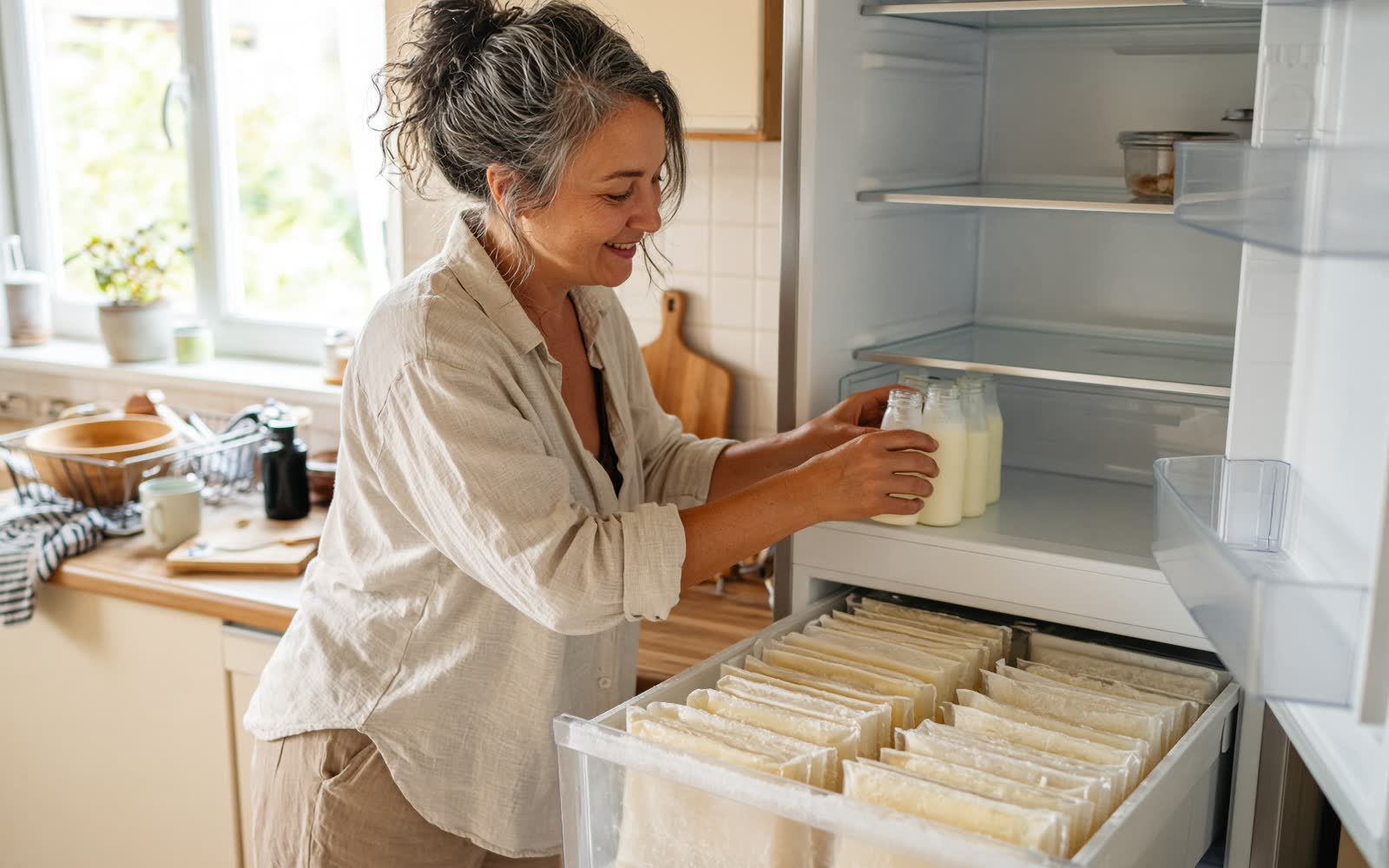
The short answer: freshly expressed milk keeps about 4 hours at room temperature, 4 days in the fridge by the US clock and up to 8 by the UK one, and 6 months at best quality in a freezer, up to 12 in a deep freezer. Once thawed it is 24 hours in the fridge by the US clock, where the NHS says use it straight away, and it never goes back in the freezer.
Our house rule, and the one every serious seller follows: the tighter clock wins for milk that is leaving your house.
Rather not do the sums? The storage checker counts the clock for any bag in the house.
The clocks
| Milk that is… | Room temperature (up to 25°C / 77°F) | Fridge (4°C / 39°F, at the back) | Freezer (−18°C / 0°F) |
|---|---|---|---|
| Freshly expressed | 4 hours | 4 days (US) to 8 days (UK) | 6 months at best quality, up to 12 in a deep freezer |
| Thawed, was frozen | 1 to 2 hours | 24 hours (US); the NHS says use it straight away | Never refrozen |
| Left over from a feed | Two hours from when the baby stopped drinking by the US clock, one hour by the NHS one, then it goes down the sink | ||
| In a cool bag with ice packs | 24 hours, then fridge, freezer or feed | ||
Why the British and American numbers disagree
The NHS allows expressed milk up to 8 days at 4°C or lower. The CDC says 4 days. Nobody is wrong and nothing changed about the milk: the two agencies drew different margins around the same evidence, because a home fridge in the real world is rarely the temperature its dial claims.
Our house rule, and the one every serious seller we know already follows: the tighter clock wins for milk that is leaving your house. Four days chilled, six months frozen, dated on every bag. Nobody has ever complained that milk arrived fresher than promised.
The clock only starts if the milk starts cold
- Cold within the hour. Straight to the fridge or the freezer. Milk left standing on the counter after a session is the commonest avoidable slip there is, and it spends the clock before the clock starts.
- Chilled joins chilled. Never add warm milk to cold or frozen milk – cool the new lot in the fridge first, then combine.
- Back of the shelf, never the door. The door swings warm every time someone wants the ketchup.
- Hands washed, parts washed. Pump parts in hot soapy water after every session, sanitised daily, air-dried on a clean towel rather than a tea towel – the rest of the routine is in pumping for a surplus.
Freezing so it's still good in six months
- Portion small. Two to four ounces per bag – 60 to 120 ml – for baby feeds. Thawing 8 oz to use 3 wastes the other 5.
- Leave a thumb of headroom. Milk expands as it freezes and a full bag splits at the seam.
- Freeze flat. Flat bags freeze faster, stack like bricks, thaw quicker and pack tighter into a shipping box.
- Write the pumping date on every bag and rotate oldest first. The day it went into the freezer is the wrong date, and a marker pen is the whole system.
- A chest freezer beats the ice box. It holds temperature through door openings and power blips, which is exactly what the longer storage times assume.
 Breastmilk Freezer Stash 101
Tap to play – nothing loads from YouTube until you do
Thawing without wrecking it
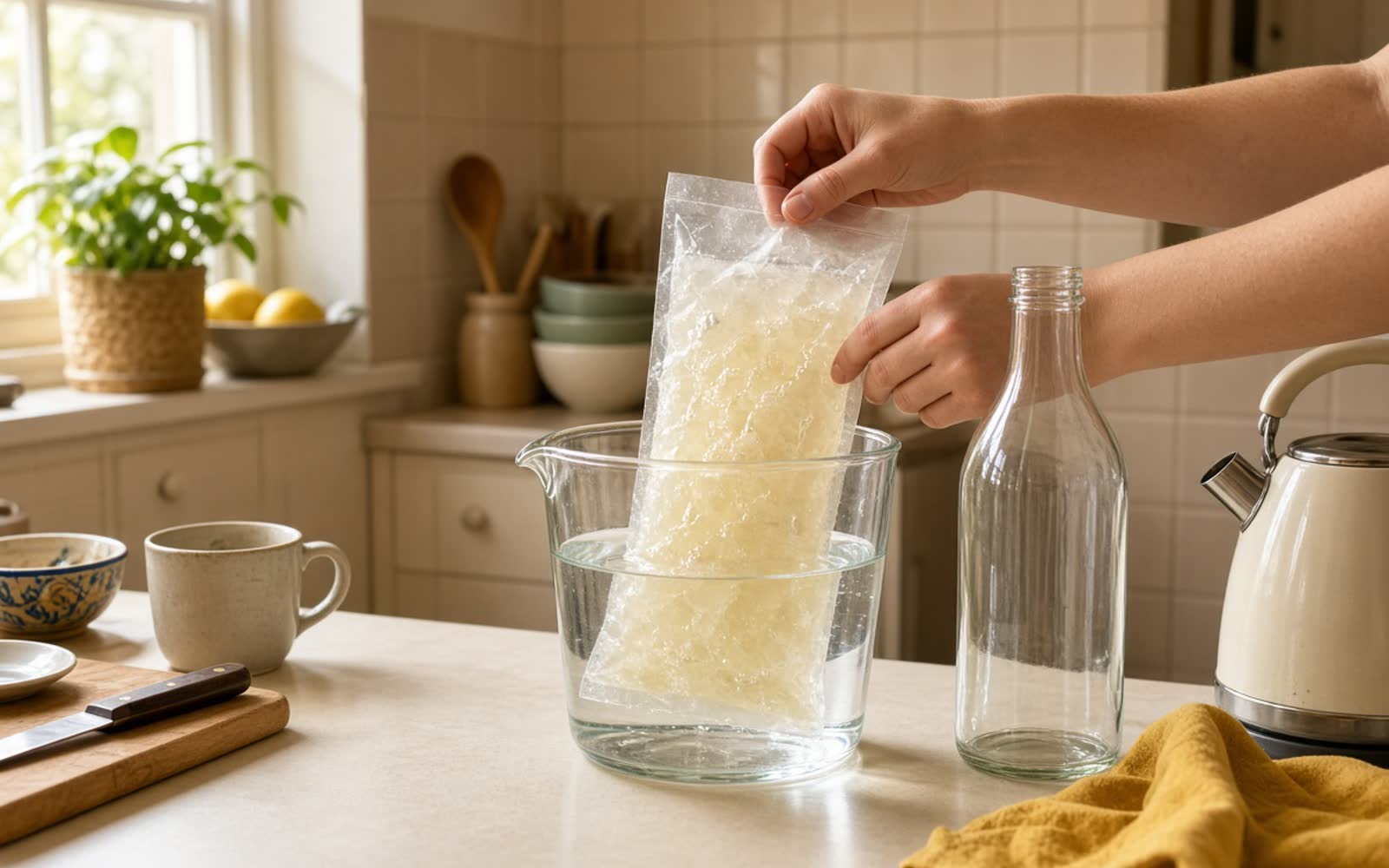
- Overnight in the fridge is the gentle way. In a hurry, hold the bag under lukewarm running water.
- Never the microwave. Hot spots scald a baby's mouth and the heat destroys the live components that made the milk worth freezing.
- Swirl, don't shake. Separated fat is normal and swirls back in.
- Once fully thawed: 24 hours in the fridge, and it never goes back in the freezer. A bag with ice crystals all the way through can go back, La Leche League says; the CDC and the NHS draw no separate line for it. A slushy bag with liquid round a lump of ice counts as thawed.
The soapy smell
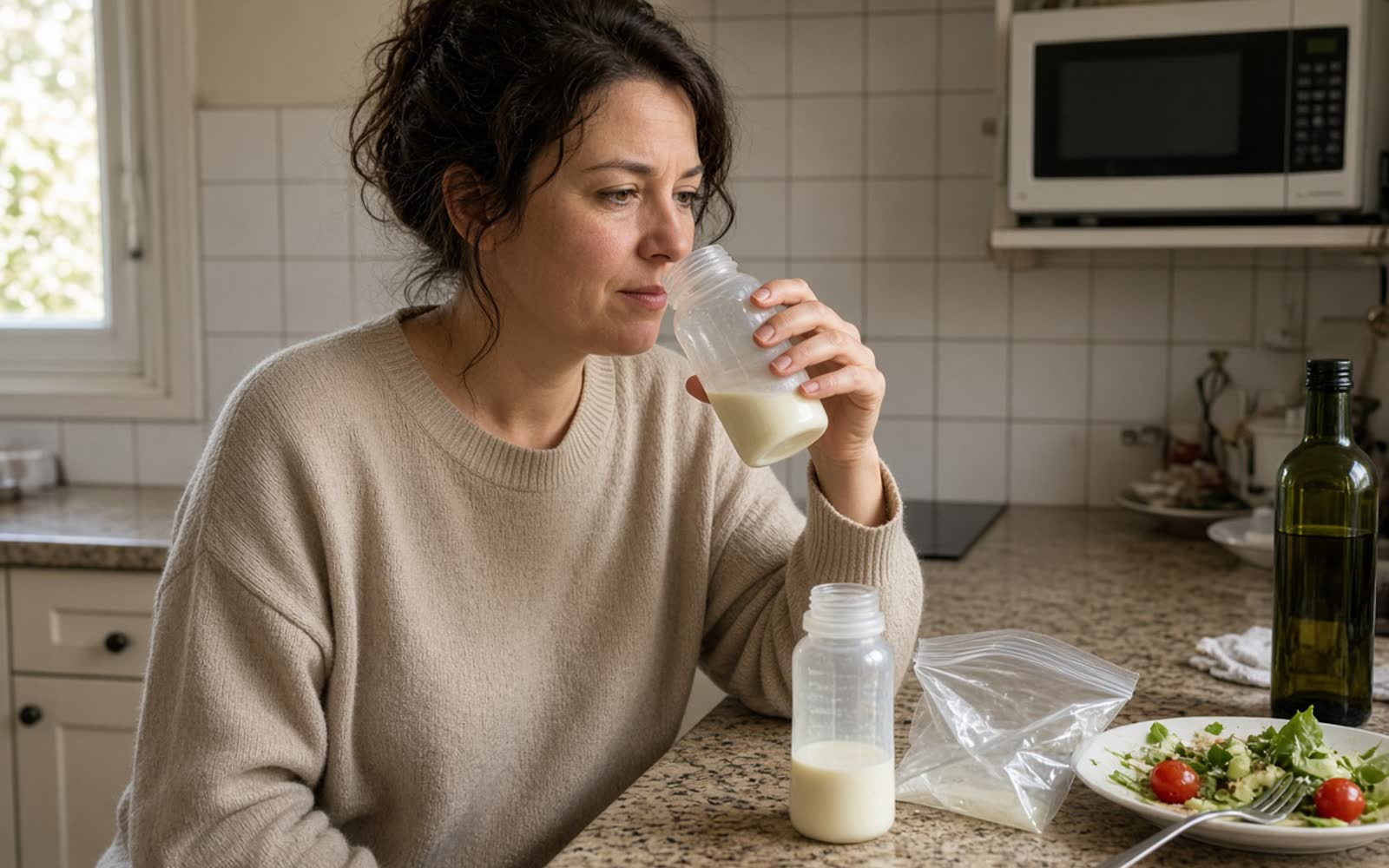
Thawed milk that smells soapy, metallic or like old pennies has been changed by lipase, an enzyme in all breast milk that keeps breaking fats down in the fridge and freezer. It is safe and it is common. The catch is that some babies taste it and refuse the bottle, which is a miserable discovery to make with 200 ounces – six litres – already in the freezer.
Test one bag early, before you build a stash. If your baby turns it down, try mixing a little into fresh milk first, or using milk that has been frozen for less time. Scalding fresh milk before freezing stops the smell in future batches: heat until tiny bubbles form at the edges of the pan, about 82°C / 180°F, and stop well short of a rolling boil – then cool it fast in a bowl of iced water and freeze. It has a cost. The Academy of Breastfeeding Medicine advises against heating milk above 40°C because heat destroys many of its immune components, and milk banks won't take milk that has been heated, so scald only after mixing and fresher milk have failed. Milk already frozen can't be fixed after the fact, but if it was never heated it can be donated, and it can be mixed with fresh milk in small proportions or sold to a buyer who is told about it. Sour or rancid is a different smell entirely – that one goes down the sink.
If the milk is going to someone else
Everything above, plus three habits that make you the seller people come back to:
- Dates visible on every bag. Buyers are not being difficult; they are being careful, and a photograph of dated bags answers the question before it's asked.
- Tell them the storage story. Deep freezer or fridge freezer, when it was pumped, whether it was scalded. That is what a disclosure sheet is for.
- Ship frozen solid and never into a weekend. The cold chain guide is the whole packing list.
Common questions
How long does breast milk last in the fridge?
NHS guidance allows up to 8 days at 4°C or lower at the back of the fridge; the CDC says 4 days. Both describe the same milk with different margins of caution, because a home fridge is rarely the temperature its dial claims. Use the 4-day clock for any milk you will hand to someone else.
How long does breast milk last in the freezer?
Six months at best quality, on both sides of the Atlantic, and up to 12 months in a deep freezer at −18°C. Milk does not turn dangerous at six months and a day: it slowly loses fat quality and some antibody activity.
Can you refreeze thawed breast milk?
No. Fully thawed milk keeps 24 hours in the fridge on the US clock – the NHS is stricter and says use it straight away – and it never goes back in the freezer. A bag with ice crystals all the way through can go back, La Leche League says; the CDC and the NHS draw no separate line for it. A slushy bag with liquid round a lump of ice counts as thawed.
Why does my thawed breast milk smell soapy or metallic?
Lipase, an enzyme in all breast milk, keeps breaking fats down in the fridge and freezer, and that changes the smell. The milk is safe and it is common, but some babies taste it and refuse the bottle. Scalding fresh milk before freezing prevents it in future batches, at a cost to the milk's immune components, and milk banks won't take milk that has been heated. Sour or genuinely rancid is a different smell, and that milk goes down the sink.
Where in the freezer should breast milk go?
At the back, never in the door, which swings warm every time someone wants the ketchup. A chest freezer holds temperature through door openings and power blips, which is exactly what the longer storage times assume.