Guides › Start here
Thinking of selling your breast milk? Start here.
Maybe your freezer is filling faster than your baby can drink. Maybe you've heard other moms mention it and wondered – is that actually a thing? It is. Here's the friendly version of everything you're quietly wondering.
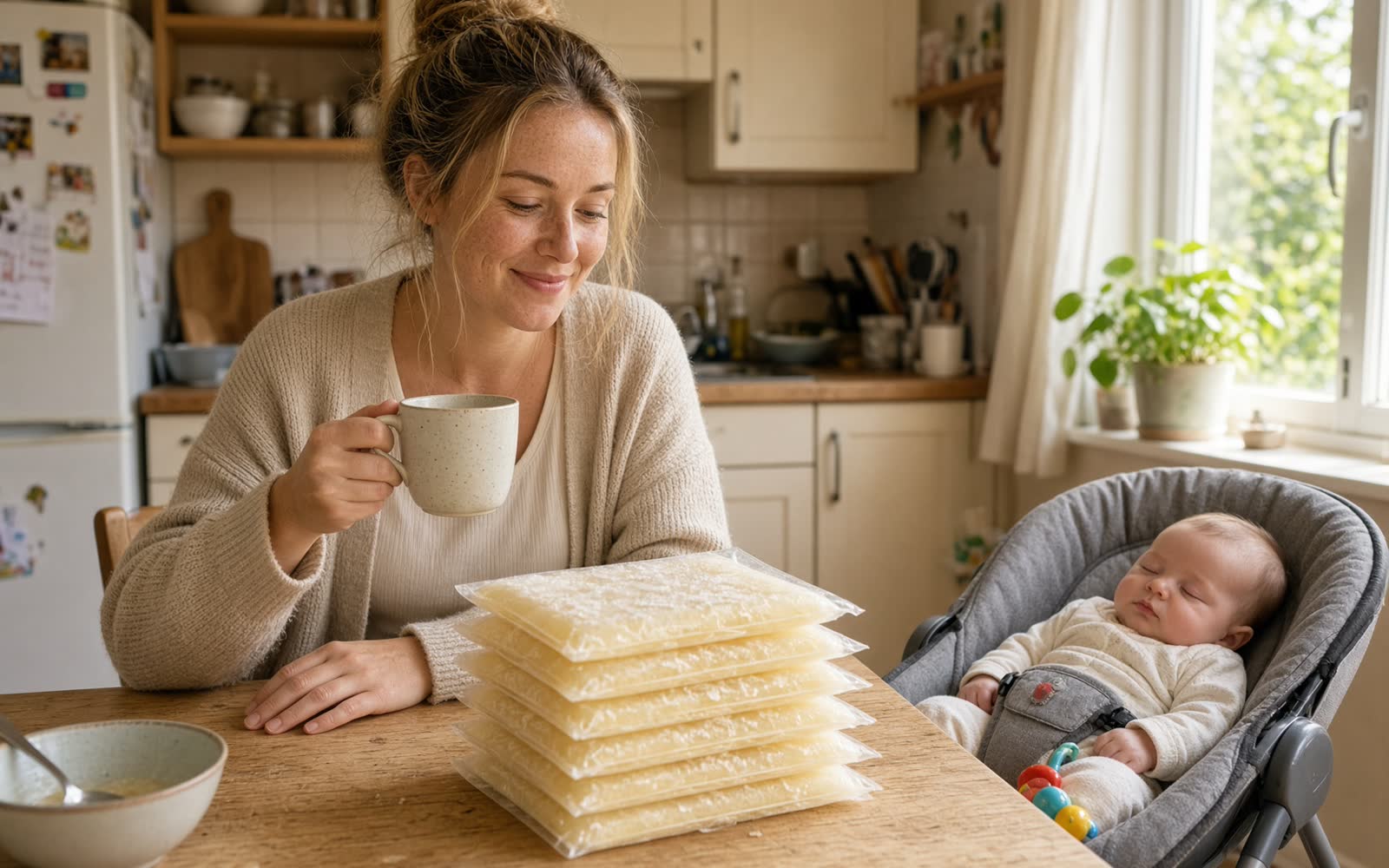
Can you sell your breast milk? Yes. It is legal in the UK and the US, it usually goes for $1.50 to $4.50 an ounce (about £1.20 to £3.50 per fl oz), and the job itself is dating bags, freezing them flat, and posting a cold box early in the week. UK sellers who sell regularly register as a food business with their council – free, twenty minutes, and nobody can refuse you.
First, the question you haven't said out loud: is it legal?
Yes. In the United States, selling your own breast milk is legal. In the UK, it's legal too – milk is treated like a food, which mostly means the common-sense hygiene you're already doing. No licence to sell your own milk, no grey market, no whispering required. The slightly longer version lives in Is it legal to sell breast milk?, and it will take you two minutes. If you're somewhere else in the world, here is the country-by-country list.
Second: it's genuinely wanted
Every week, parents who can't produce enough go looking for milk – adoptive families, surrogacy families, moms whose supply never came in, dads suddenly doing every feed. There are also athletes who buy in bulk and pay reliably, if you choose to sell to them; that choice stays entirely yours, listing by listing. Your surplus is a wanted thing rather than a strange one, and the wanting is mostly very tender.
Third: it's worth real money
Peer-sold milk typically fetches $1.50–$4.50 per ounce (about £1.20–£3.50 per fl oz). A 100 oz weekly surplus, three litres, is grocery money; a big freezer stash is several hundred dollars sitting between the peas and the ice cream. Put your own stash in and see. The full pricing logic – what moves the number and how new sellers climb it – is in How much is breast milk worth?
Fourth: the routine is one you already have
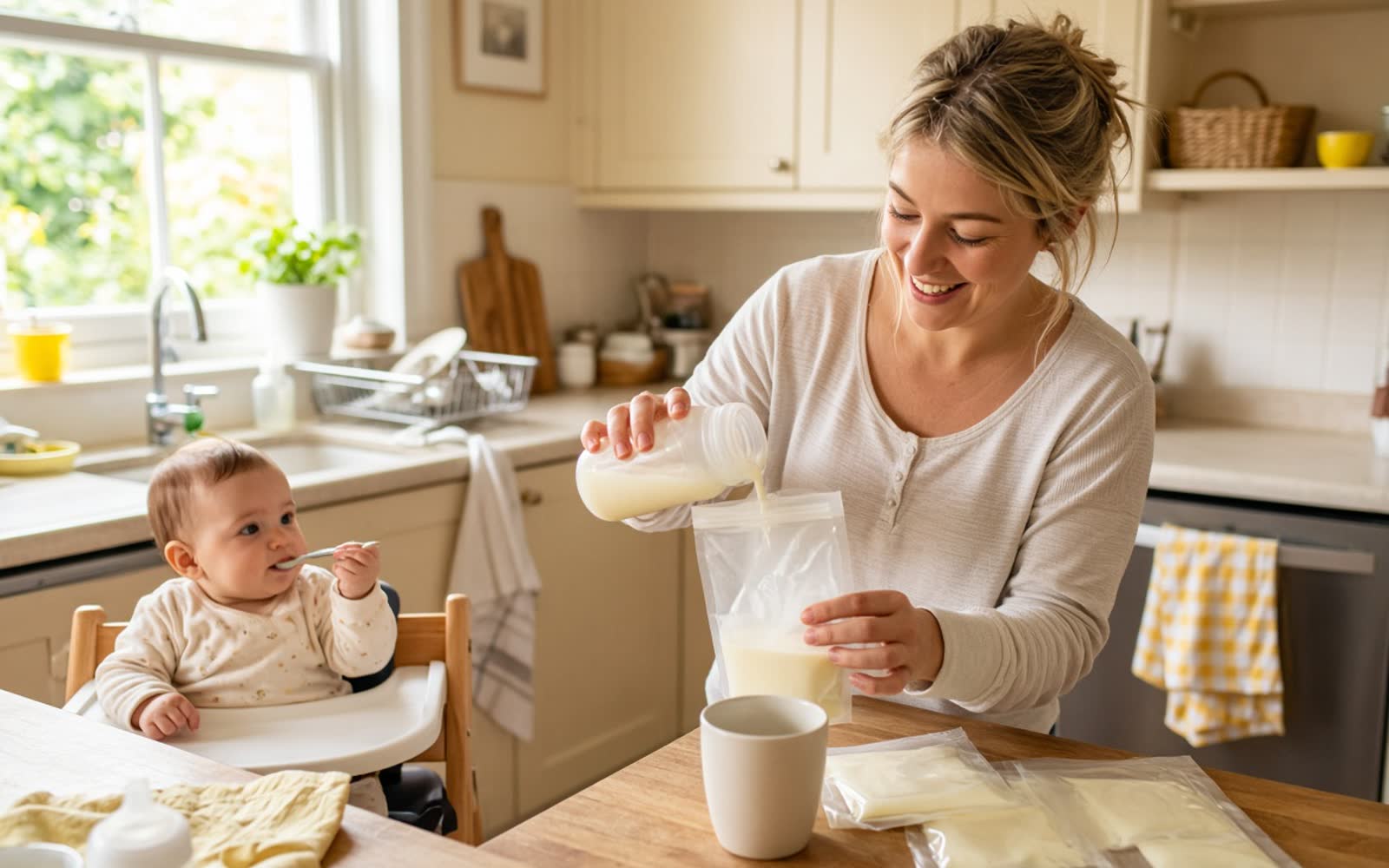
If you pump, you're most of the way there. Selling well adds three habits: date every bag and freeze it flat, write an honest note about your diet and routine (buyers ask, and candour is what earns the good prices), and pack shipped orders cold – one box recipe, learned once, in the shipping guide. That's the job. There's no factory to build.
 7 Rules to Live By When Exclusively Pumping
Tap to play – nothing loads from YouTube until you do
And the honest caveats
- Milk money is taxable income (UK sellers: the first £1,000 a year is covered by the trading allowance).
You don't have to decide today
MilkMom opens soon. The first sellers get a year without platform fees and a say in the rules while they're still being written. Registering your interest costs nothing and commits you to nothing; it just holds your place.
Waiting doesn't cost you milk, either. Deep-frozen bags hold best quality for six months – a year in a chest freezer by US guidance – so a stash built while you think it over is still at its best when you decide. If you want to see every door before choosing, where selling actually happens today maps the venues honestly, ours included.
Common questions
Can I sell my breast milk?
Yes. Selling your own milk is legal in both the UK and the US, and in Canada, Australia and most of the English-speaking world. In the UK, anyone selling regularly registers as a food business with their local council – it's free, takes about twenty minutes, and the council cannot refuse the registration. In the US there is nothing to register. The two-minute legal version is here, and the country-by-country list is here.
How much money can I make?
Peer-sold milk typically fetches $1.50 to $4.50 an ounce, about £1.20 to £3.50 per fl oz. A steady surplus of 100 oz a week, three litres, is grocery money; a full freezer stash is several hundred dollars. What moves the number – dates, screening, consistency, how you present a listing – is in what breast milk is worth.
Who actually buys it?
Mostly parents who can't produce enough: adoptive and surrogacy families, mothers whose supply never came in, fathers doing every feed. Some adults buy for themselves, including athletes. Whether your listing is open to them is your setting, listing by listing.
Do I have to be tested or screened?
No law requires it for peer selling in either country. Buyers value it, so a health screen is an optional badge on MilkMom rather than a gate. What buyers ask for most is simpler: dates on every bag and an honest disclosure sheet about your health, diet and storage. Which tests, what they cost and how often to repeat them is here.
Is it safe for the person buying it?
Handling decides it. Milk frozen fast, kept cold, shipped frozen and described honestly is a different proposition from an anonymous cash handover in a car park – which is what the bacteria study everyone quotes actually measured. That study, read properly, is here.
What if I'd rather donate?
Then donate. Milk banks supply neonatal units and will take a freezer stash that meets their criteria, unpaid. Selling is one of five things you can do with a surplus, and the other four are here – or compare bank, sharing and selling directly.