Guides › The surplus
More milk than baby: what to do with excess breast milk
Nobody prepares you for this one. The freezer drawer won't shut, the milk at the back is nearing a year old, and every article you can find treats your body's generosity as a problem to be corrected. Five doors, in the order we'd actually walk through them.
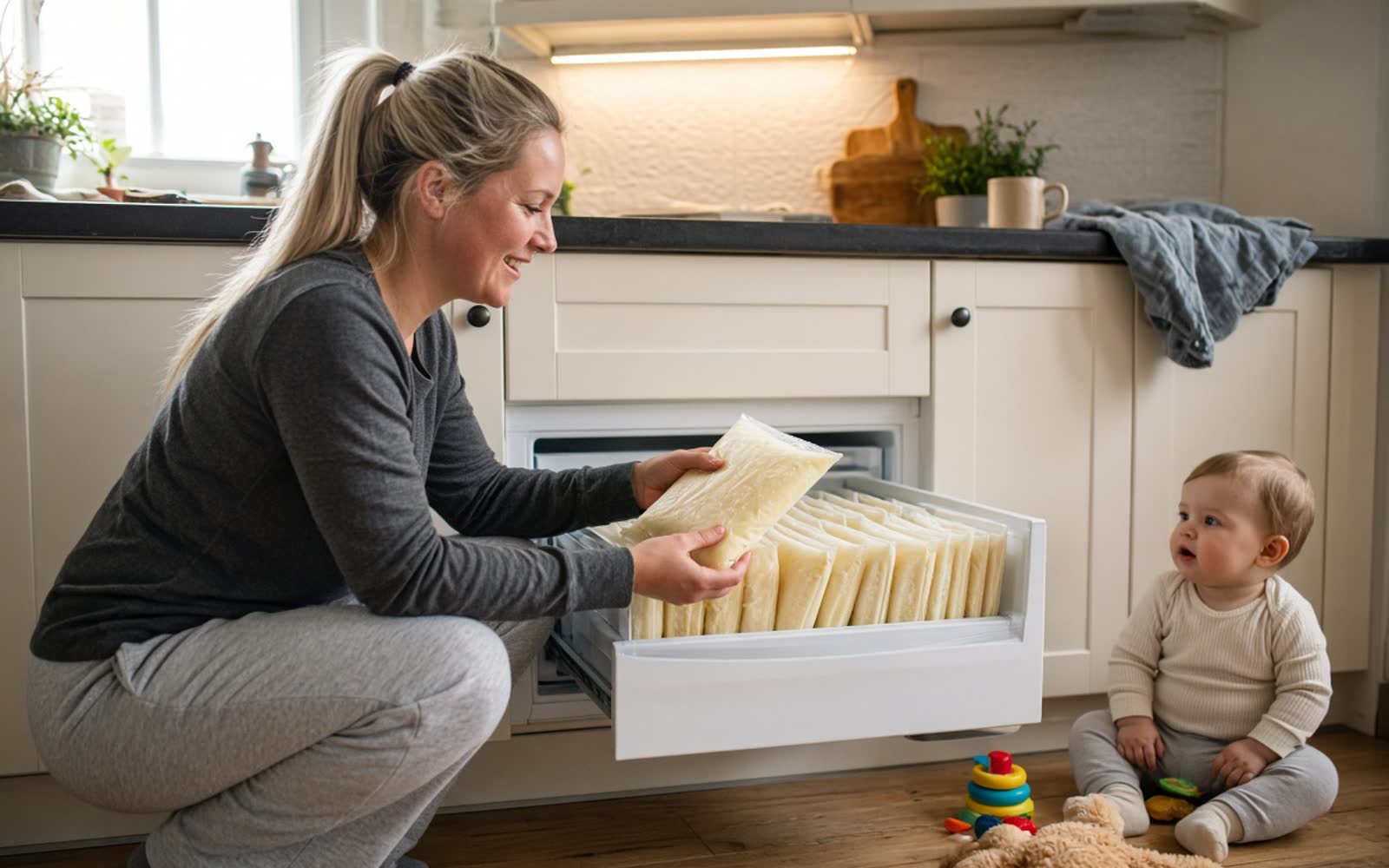
The short answer: there are five things you can do with excess breast milk. Keep it and rotate it for your own baby · donate it to a milk bank, where it goes to premature and sick infants · share it unpaid with another family · sell it, which is legal in the UK and the US · or ease back on pumping so you make less. Most mothers end up doing two of them.
Milk your baby will drink within six months isn't surplus. The milk to decide about is what's left after that. If there is no baby drinking any of it – weaned, exclusively pumping, or lactating by choice – start here instead.
First, what counts as a surplus
Surplus doesn't mean more than today's feeds. It means the milk your baby won't get through before it ages out of the freezer: six months at best quality, up to a year in a deep freeze. If you're pumping 40 oz a day and the baby takes 25, that is 15 oz spare daily – roughly three litres a week, and the arithmetic gets away from you fast. Work out what you're actually holding before you decide anything – the storage clocks tell you how long you have to decide in.
Door 1 – Keep it, but properly
The default, and the one that wastes the most milk. A stash is only an asset if it's rotated: dated bags, oldest first, portioned small. Most mothers need far less banked than they think – for a nursery, a sitter, a return to work, or a slow wean, a few hundred ounces covers it. Anything beyond what you'll use in six months has stopped being a safety net and become storage.
Be honest about the freezer, too. Milk in the ice box on top of a fridge is on a shorter clock than milk in a chest freezer, and a single power cut can take the lot.
Door 2 – Donate it to a milk bank
We say this first, in print, on every page where the question comes up: if there is a fragile baby who needs your milk, that is the highest use of it. Milk banks supply neonatal units, where donor milk goes to premature and sick infants for whom it is closer to medicine than food.
- How it works: a phone call, a health questionnaire, a free blood screen, then bottles or bags collected or couriered. The bank pasteurises, tests and distributes. In the UK, UKAMB lists the banks; in North America it's HMBANA.
- What they ask: usually a minimum volume commitment, milk under a certain age, and a baby under a certain age – criteria vary bank to bank, so ask rather than assume you don't qualify.
- What you get: nothing, financially. Non-profit banks don't pay donors. What you get is the knowledge of where it went, and that is not a small thing.
If your freezer is full and the bank will take it, take it there. We would rather be the second call than pretend we should be the first. The three routes side by side – what each pays, asks and reaches – are in milk bank, sharing or selling.
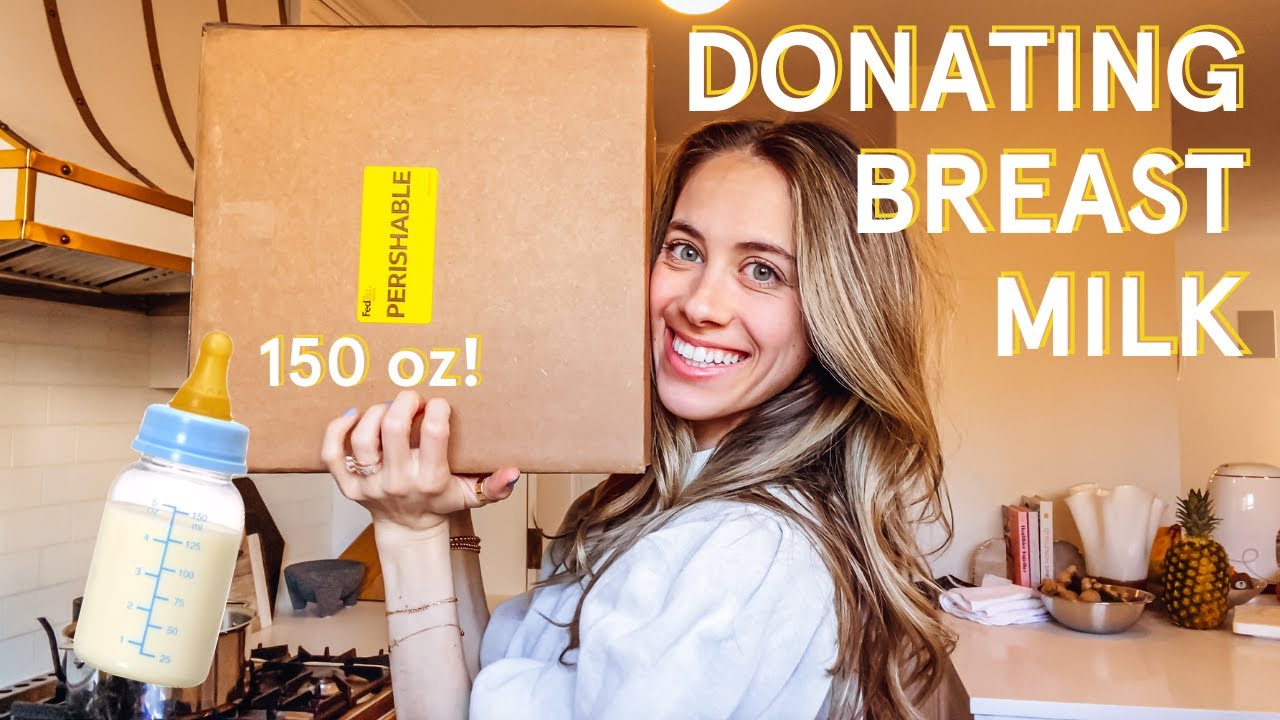 Donating breastmilk (150 ounces to the NICU)
Tap to play – nothing loads from YouTube until you do
Door 3 – Share it, unpaid, with another family
Informal milk sharing is old, widespread, and mostly organised through community groups where donation is the whole culture. It moves milk fast, it costs nothing, and it often lands with a family in a hard month.
Two rules of the road. First, those groups are for donation – posting anything for sale in them is against their rules and, more to the point, it's rude. Second, informal sharing skips the screening and pasteurisation a bank does, so the safety rests entirely on honesty between two people: health history, medication, alcohol, how the milk was stored. That is exactly what a disclosure sheet is for, whether or not money is involved.
Door 4 – Sell it
Our interest is on the table: we are building a marketplace, so read this door knowing who wrote it.
Selling surplus milk is legal in the UK and the US, it is done every day, and for a mother pumping a genuine surplus it can be meaningful money rather than pocket change – see what it's actually worth. In the UK, anyone selling regularly registers as a food business with their council: free, twenty minutes, and the walkthrough is here. In the US there is nothing to register.
The parts people underestimate: it is a small logistics job. Frozen solid, packed tight, shipped Monday to Wednesday, tracked. Buyers are usually other parents, sometimes adults buying for themselves, and the good ones are careful people who want dates and details, not chat. If the idea sits oddly with you, the essay on why it feels weird is worth ten minutes.
As for where the selling actually happens – today's venues, what each pays and what each asks of you – the seller's map is here. And if none of today's options appeal, remember the stash keeps for months deep-frozen: picking this door does not mean walking through it this week.
Door 5 – Make less
The option nobody in this industry has any incentive to mention. If pumping around the clock is costing you sleep, sanity or your shoulders, you are allowed to stop. A stash is not a moral achievement, and dropping a session is not failing anybody.
How to ease off without engorgement, blocked ducts or mastitis is a real clinical question with real technique behind it, and it depends on your body, your baby and how far into this you are. That conversation belongs with an IBCLC, a midwife or a health visitor – all free, all listed here. Do not let a website talk you into or out of it.
 Overcoming breastfeeding challenges: Oversupply of milk
Tap to play – nothing loads from YouTube until you do
Choosing, in four questions
- Will my own baby drink it before it ages out? If yes, it isn't surplus – rotate it and stop worrying.
- Is there a milk bank near me that will take it? If yes, and you can meet their minimum, start there.
- Do I want money for it, or do I want it gone? Both are legitimate answers, and neither one is a judgement on you.
- Is producing it still good for me? If the honest answer is no, door five outranks all of the others.
Common questions
Can I sell my excess breast milk?
Yes. Selling your own milk is legal in the UK and the US, and peer-sold milk usually goes for $1.50 to $4.50 an ounce, roughly £1.20 to £3.50 per fl oz. UK sellers who do it regularly register as a food business with their council: free, and the walkthrough is here. In the US there is nothing to register. The fuller picture is in thinking of selling and what it's worth.
Can I donate it instead?
Yes, and if a milk bank near you can take it, that is where we would send it first. Banks supply neonatal units, screen donors with a free blood test, and pasteurise everything. They usually ask for a minimum volume and set limits on how old the milk and the baby can be, so ask rather than assume you don't qualify. UKAMB lists UK banks, HMBANA the North American ones.
What can I do with old frozen breast milk?
Milk past its best-quality window is not automatically waste. It can be mixed in small amounts with fresher milk for your own baby, used in the bath, or passed to a peer who accepts older milk with the date disclosed. Milk banks and most buyers work to their own age limits, so check before you promise a batch to anyone. Sour or rancid-smelling milk goes down the sink – the storage guide covers telling that apart from the harmless soapy lipase smell.
How much excess milk is worth selling?
Enough to fill a shipping box makes the logistics worth it: 100 to 200 ounces frozen flat – three to six litres – travels well and covers packing and postage comfortably. Smaller amounts are usually better donated or shared locally, where there's no cold chain to pay for.
Is oversupply a problem I should be doing something about?
Two different questions live in that one. Clinically, oversupply means a body making more than it is asked for, sometimes with pain, blocked ducts, or a baby who struggles with a fast letdown – that belongs with a midwife, health visitor or IBCLC, and the free helplines are here. If your only symptom is a freezer that won't shut, this page is the right page.