Guides › Smoking, alcohol and medication
Can I sell my milk if I smoke, drink or take medication?
Search this question and every answer you find is a milk bank's list of disqualifications. A bank is playing a different game, for different babies, with different stakes. This is what your cigarettes, your evening glass, your prescription and your coffee actually mean when the milk is going to another family.

The short answer: usually yes – because the strict rules you have been reading were written for a different product. Milk banks collect pooled milk for premature and unwell babies, so they decline smokers, defer most medication and rule out more than the odd drink. Selling to one family runs on a different instrument: the disclosure sheet. You write down what is true – what you smoke, what you take, what you drank and when – and a buyer chooses for her own baby with the facts in front of her. The coffee and the prescription do not disqualify you. Writing something untrue on that sheet does.
The rules you found are bank rules
Bank milk is pooled with other mothers' milk, pasteurised, and sent first to premature and unwell babies – the most fragile stomachs there are. So banks set the bar where a hospital needs it. The UK's Hearts Milk Bank cannot accept a donor who smokes, vapes or uses nicotine patches, and even a partner smoking in the house rules a donation out. Banks in the US decline tobacco and cannabis, build waiting periods around alcohol, and keep a short list of everyday medicines they can accept – paracetamol, ibuprofen and the flu jab are fine, and much else means a pause or a no. None of that is fussiness. It is the right standard for a clinical product.
Your buyer is somewhere else entirely: one family, one healthy baby, and a sheet with your name on it. A bank's list answers "is this milk safe to pool for a premature baby?" Your sheet answers "does this family, knowing everything, want this milk?" Different questions, and often different answers – which is why screening and disclosure are two separate things: the blood panel speaks to infections, and the sheet speaks to everything on this page.
Smoking and vaping
The facts first. Nicotine passes into milk, and its level there follows the level in your blood – highest just after a cigarette, roughly halved after an hour and a half or so. It is worth knowing what the NHS tells a smoking mother about her own baby: if quitting is not happening, keep breastfeeding, because formula carries none of the protective components that still make her milk worth it, and manage the smoke instead – feed first, smoke after, never indoors near the baby.
Selling is a different sum, because a buyer has the choice that a baby's own mother is weighing differently. Smoke belongs on the disclosure sheet – yours, and your household's, since careful banks ask about both for a reason. Expect most buyers feeding a baby to pass, and let them without resentment: that is precisely the decision the sheet exists to allow. Vaping and nicotine patches go on the sheet the same way. Nicotine is nicotine to the reader deciding for her child.
Alcohol
Alcohol leaves milk the way it leaves blood: with time, and by no other route. The CDC's figures are usefully plain – alcohol from one drink is detectable in milk for about two to three hours, from two drinks about four to five, from three drinks about six to eight. And the myth needs saying out loud: pumping and discarding milk after drinking does not clear it a minute faster. The alcohol drains back out of the milk as your blood level falls, on its own schedule.
So the working rule for a seller is a clock, not abstinence. Pump for the freezer before the glass, or leave the pump alone until the window has well passed. Banks build wider margins than the CDC clock and decline daily drinkers altogether – a margin worth copying when the milk is leaving your house, because "I was sure it had cleared" is a sentence you never want to need. An evening glass with the clock respected is a disclosure-sheet line, and no reason you cannot sell.
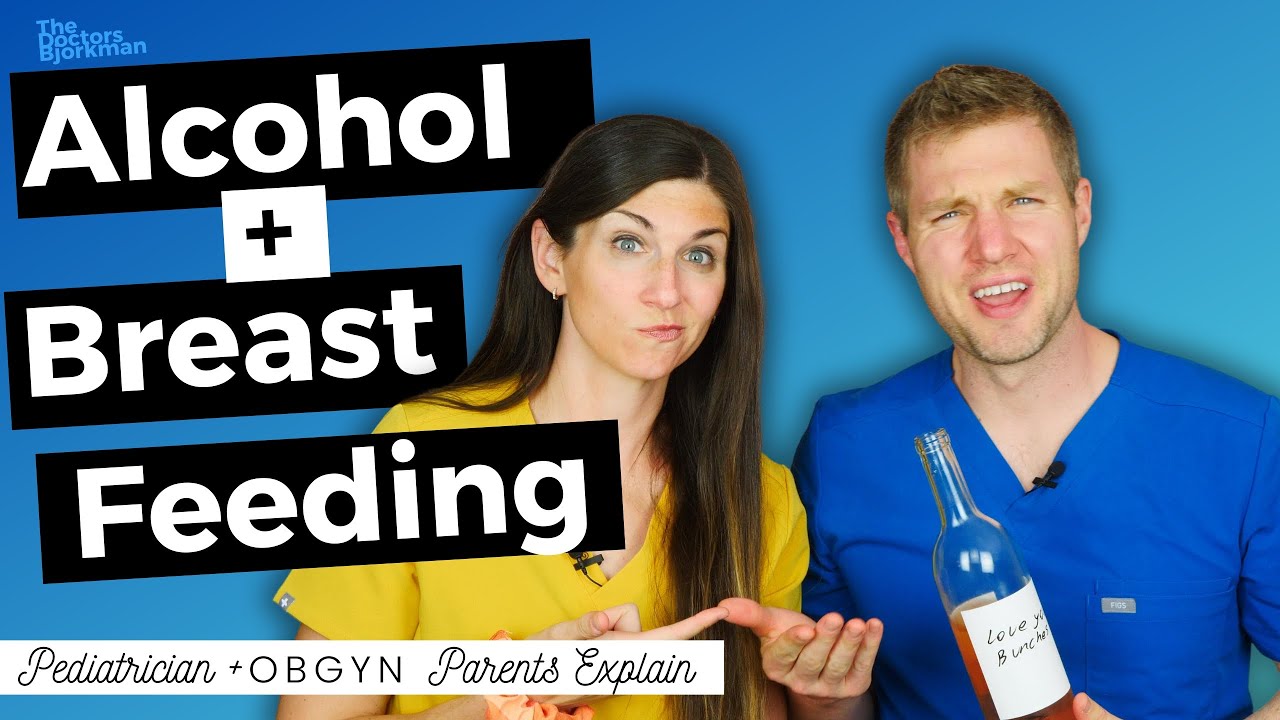 You Don’t Need to Pump & Dump: an OB/GYN and a paediatrician on alcohol
Tap to play – nothing loads from YouTube until you do
Medication – and the rule that outranks everything else here
Start with the rule: never stop, skip or thin a prescribed medicine to give your milk a cleaner sheet. Not for a batch, not for a buyer, not for a price. The milk is a by-product of you being well. Guard the source.
Now the practical part. "Safe while breastfeeding" – the phrase on the patient leaflet – usually means safe for your own healthy baby, with your own doctor in the loop. A buyer may be feeding a smaller, younger or more fragile child, which is why banks defer many medicines that are entirely fine for a mother's own baby. The peer version of that caution is names, not silence: the medicine and the dose, written on the sheet, so a buyer can look it up and ask her own questions.
Where she – and you – can look things up, free: LactMed, the US National Library of Medicine's drugs-and-lactation database, and in the UK the Drugs in Breastmilk service run by the Breastfeeding Network's pharmacists. Those services are also our answer to a question we never touch: whether a medicine is right for you and your baby belongs with your prescriber and the people trained to answer it, and never with a milk marketplace.
Herbal supplements and high-dose vitamins count. Banks treat them as medication, and your sheet should too.
Cannabis is its own case
Deliberately not folded in with medication. THC is fat-soluble, so it does not run out of milk on an alcohol-style clock – it settles into the milk's fat and lingers, detectable in studies up to six days after use and in some work considerably longer. There is no waiting period we could honestly quote you. The CDC's advice while breastfeeding or pumping is not to use cannabis in any form, CBD included, and milk banks decline cannabis use flat.
Which leaves a plain conclusion: milk pumped anywhere near cannabis use cannot honestly be described as free of it, and this whole page rests on the sheet being worth something. If cannabis is a regular part of your life right now, selling milk is not – and that is said kindly, with the door left open for later.
Coffee, food and the rest of an ordinary life
Caffeine passes into milk in small amounts, and ordinary intake is considered fine when feeding your own baby. It earns a sheet line only at the strong end – the pot-a-day habit – and earns a conversation only with a buyer whose baby came early, because small babies clear caffeine slowly.
Your food reaches the milk too, and mostly that is simply the normal life good milk comes from. The one place diet stops being small talk is allergy: cow's-milk protein from your meals passes into your milk, which matters enormously to a buyer with a dairy-allergic baby and not at all to most others. Answer diet questions as asked, plainly.
Common questions
Can I sell my breast milk if I smoke?
You can list it, and you must say so on the sheet – most buyers feeding a baby will pass, and that is the sheet doing its job. A bank would decline you outright. For your own baby, the NHS advises a mother who cannot quit to keep breastfeeding and manage the smoke, because formula carries none of milk's protective components.
Can I drink alcohol and still sell my milk?
Yes, by respecting the clock: one drink is detectable in milk for about two to three hours, two drinks four to five, three drinks six to eight. Pump before the glass or after the window. Pumping and discarding does not speed anything up.
Can I sell my milk while taking antidepressants or other prescriptions?
Never stop a medicine to make milk sellable – no batch is worth your health. Name it on the sheet with the dose so the buyer can look it up on LactMed or ask Drugs in Breastmilk. Whether it is right for you and your baby is your prescriber's territory, not ours.
Do I have to tell buyers what I smoke, drink or take?
Yes. Held payment, ratings, repeat buyers – everything this market rests on assumes the sheet is true. One discovered omission is the end of a seller's name, and deservedly.
Will smoking or medication lower my price?
It narrows the pool of buyers more than it moves the price. A recent screening panel and an uncomplicated sheet sit at the top of the range; a complicated sheet simply meets fewer buyers, and meets them honestly.
What about my coffee?
Ordinary caffeine is a non-issue for most buyers. Note a heavy habit, and expect a question from anyone feeding a premature baby, who handles caffeine slowly.
Sources
- Hearts Milk Bank – becoming a milk donor – UK donor criteria, including the smoking, vaping and household rules
- Mothers' Milk Bank Northeast – donor milk safety and screening – a US bank's screening rules, including accepted medicines and alcohol waiting periods
- CDC – alcohol and breastfeeding – detection times per drink, and why expressing and discarding does not speed clearance
- NHS – breastfeeding and smoking
- LactMed – the NIH drugs and lactation database, including its cannabis entry on THC persistence in milk
- The Breastfeeding Network – smoking and breastfeeding factsheet, home of the UK's Drugs in Breastmilk service