Guides › The ick factor
Why does buying breast milk feel weird?
Say it out loud at a dinner party and watch the faces. The flinch is real – almost everyone has it the first time. It's also recent, local, and entirely learned, and it's worth taking apart properly.
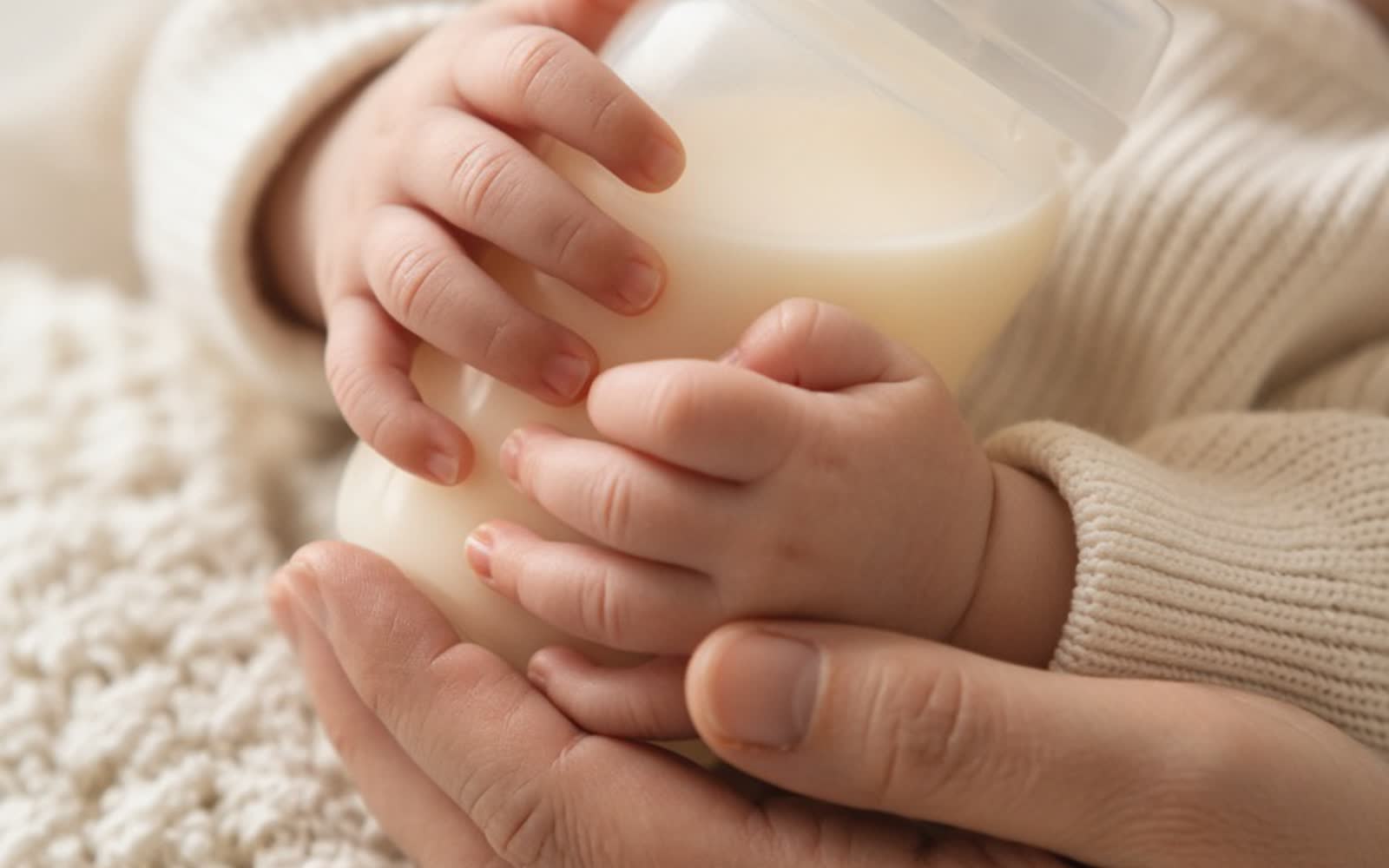
It was ordinary for most of human history
Wet nursing is one of the oldest professions on record. For thousands of years, across nearly every culture, feeding another woman's baby was skilled, respectable, paid work – royal households employed wet nurses the way they employed cooks. Neighbours cross-nursed each other's children within living memory. Islamic law has a formal category for it: children fed by the same woman become milk siblings, family in the eyes of tradition. None of these societies found milk sharing strange. They found it obvious.

Now do the cow
Whatever you drank in your tea this morning came from the body of another species – pooled from hundreds of animals you've never met, on farms you'll never see. Familiarity has made that so normal it's invisible. Meanwhile milk from a known, health-screened human, made by your own species for your own species, is the one that makes people wrinkle their noses. As logic, it doesn't survive thirty seconds of contact. It was never logic. It's just what we're used to.
Where the modern flinch actually came from
Two places. First, formula's century: once bottles became the default, milk from a person began to read as bodily and intimate while milk from a factory read as clean and neutral – a complete inversion of the older instinct. Second, the internet's venues: for twenty years the only place to buy human milk looked like the sketchy end of the classifieds, so the exchange absorbed the atmosphere of the room it happened in. The substance never changed. The venue taught us to flinch.
Ordinary things become ordinary again
Norms move faster than we think, and always the same way: better venues. Breastfeeding in public went from scandal to legally protected. Secondhand clothes went from shameful to a virtue with an app. Period products went from blue-liquid euphemism to plain speech in prime time. Doorstep milk itself vanished and is now nostalgically cool. In every case the thing stayed the same and the setting around it changed – and the setting did all the work.
That's the entire theory of MilkMom, in one paragraph: give milk sharing a venue that looks like what it actually is – mothers, kitchens, honest sheets, held payments – and the flinch has nothing left to feed on.
What to say at the dinner party
You don't have to argue. "Wet nurses fed kings for five thousand years, and you drink a cow's milk every day" tends to end the conversation on its own. If they're still going: several million mothers are lactating at any moment, plenty of them pouring surplus away while other families search for exactly that milk. The strange thing was never the sharing. The strange thing was building no decent way to do it.