Guides › The milk itself
Human milk vs animal milk: what's actually different?
Every species builds its milk for its own young. That single fact explains most of what follows – and it deserves better than either the hype or the shrug it usually gets.
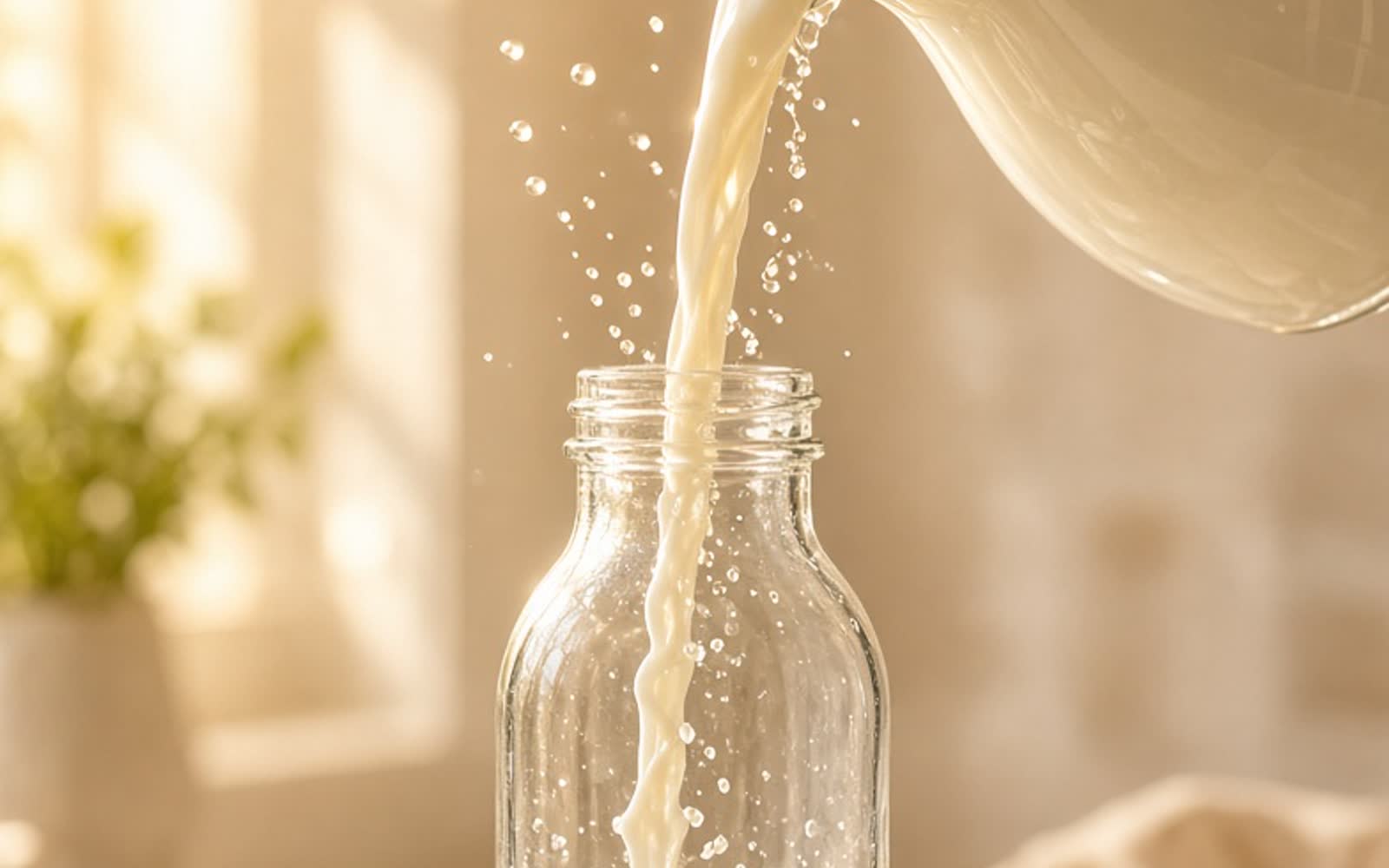
The short answer: every species builds its milk for its own young, and the differences are not small. Cow’s milk is built to turn a calf into a quarter-ton animal: casein-heavy, mineral-heavy, built for bulk. Human milk runs whey-forward and carries more than two hundred oligosaccharides, live antibodies and immune cells that no carton supplies.
One thing it does not do, and we would rather say it than have you find out later: human milk carries more lactose than cow’s milk, so switching species is no way around lactose intolerance. The true story there is proteins.
Isn't milk just milk?
No, and the differences are the point. Cow's milk is engineered by evolution to turn a calf into a quarter-ton animal in a year: heavy on casein protein, heavy on minerals, built for fast bulk. Human milk is engineered to grow a human – slower body, enormous brain – so it runs whey-forward, gentler on immature kidneys, and unusually rich in sugars that feed brain development. Each one is a precision instrument. They're just aimed at different animals.
What does human milk carry that cow's milk can't?
- Human milk oligosaccharides. More than two hundred distinct sugars, essentially absent from cow's milk, that a baby can't even digest – they exist to feed the beneficial gut bacteria. Milk that packs a lunch for the microbiome is a genuinely different substance from milk that doesn't.
- Live components. Raw human milk carries antibodies, lactoferrin, lysozyme and living cells from the mother's immune system. Shelf milk is pasteurized and standardised; those components are the trade-off.
- A moving recipe. Human milk changes composition through a feed, through the day and across months, tracking what a growing baby needs. A carton is the same in January and July.
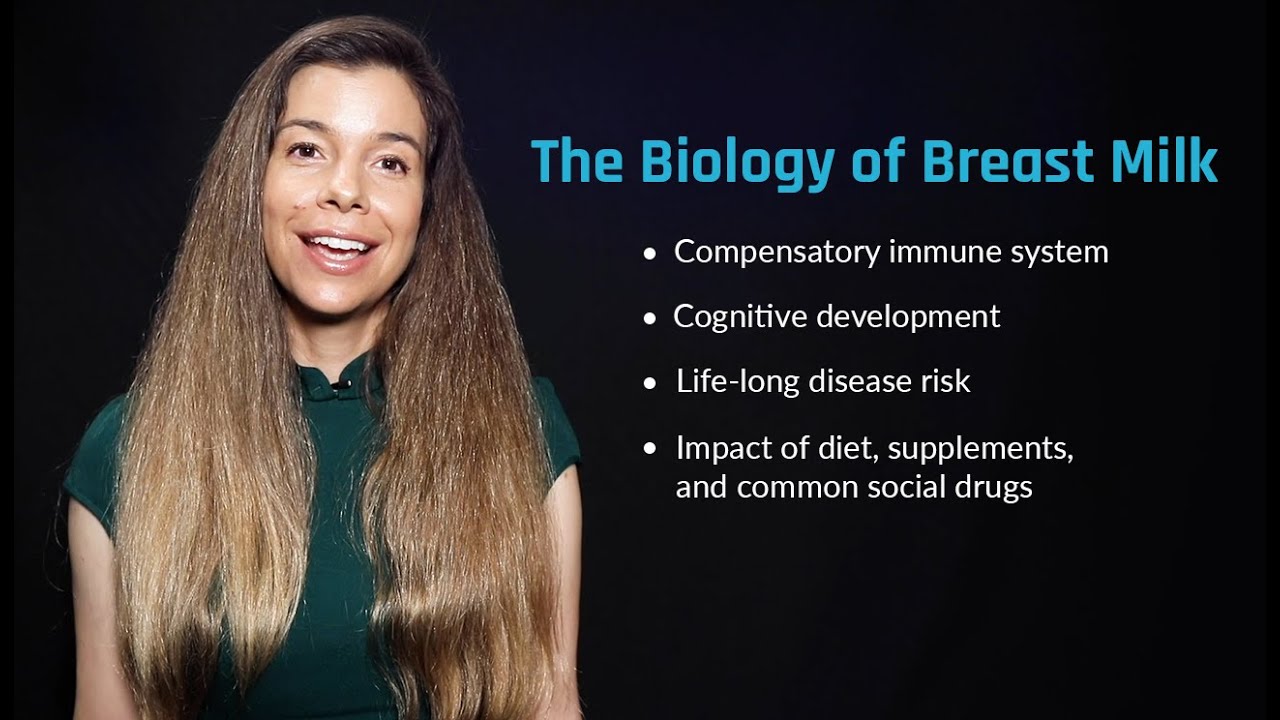 The Biology of Breast Milk
Tap to play – nothing loads from YouTube until you do
What about intolerances and allergies?
The honest version, because it's still a good story. Cow's-milk protein allergy is among the commonest food allergies of infancy, and its usual trigger – beta-lactoglobulin – simply does not exist in human milk. Species-matched proteins are the real advantage – though donor milk only helps if the donor is dairy-free herself, which is the part nobody mentions. Whether any of it matters for your own baby is a question for a clinician rather than a milk site – the free helplines are here.
Lactose is a different matter, and we'd rather tell you straight: human milk contains more lactose than cow's milk, so switching species is no way around lactose intolerance. If a site selling human milk tells you otherwise, remember what we said about disclosure being the house rule.
And "not industrially processed" – what does that mean in practice?
A supermarket carton is the pooled milk of hundreds of animals, standardised to a target fat number, homogenised, heat-treated, and weeks from the udder by the time it's poured. Peer-shared human milk is one known person's milk, days from pumping, with a disclosure sheet covering her diet and routine – traceability that no carton in history has offered. The flip side stays on the label: it's a raw food from one human body, which is exactly why the safe-buying guide exists.
So is it better – for babies, for adults?
For babies, this isn't controversial: human milk is the reference food, the standard that formula spends billions trying to approximate. For adults, we make no health claims at all – the composition facts above are simply facts, and grown buyers bring their own reasons. We did go through those reasons one at a time, and what the evidence says about adult use is its own page. What we'll say without blinking: it's the only milk on earth made by your species, for your species.