Guides › Colostrum
Can you sell colostrum?
The first milk is measured in teaspoons, matters more per drop than anything else you will ever make, and comes wrapped in the internet's most confused answers – most of which turn out to be about cows. This is the human version, told straight.
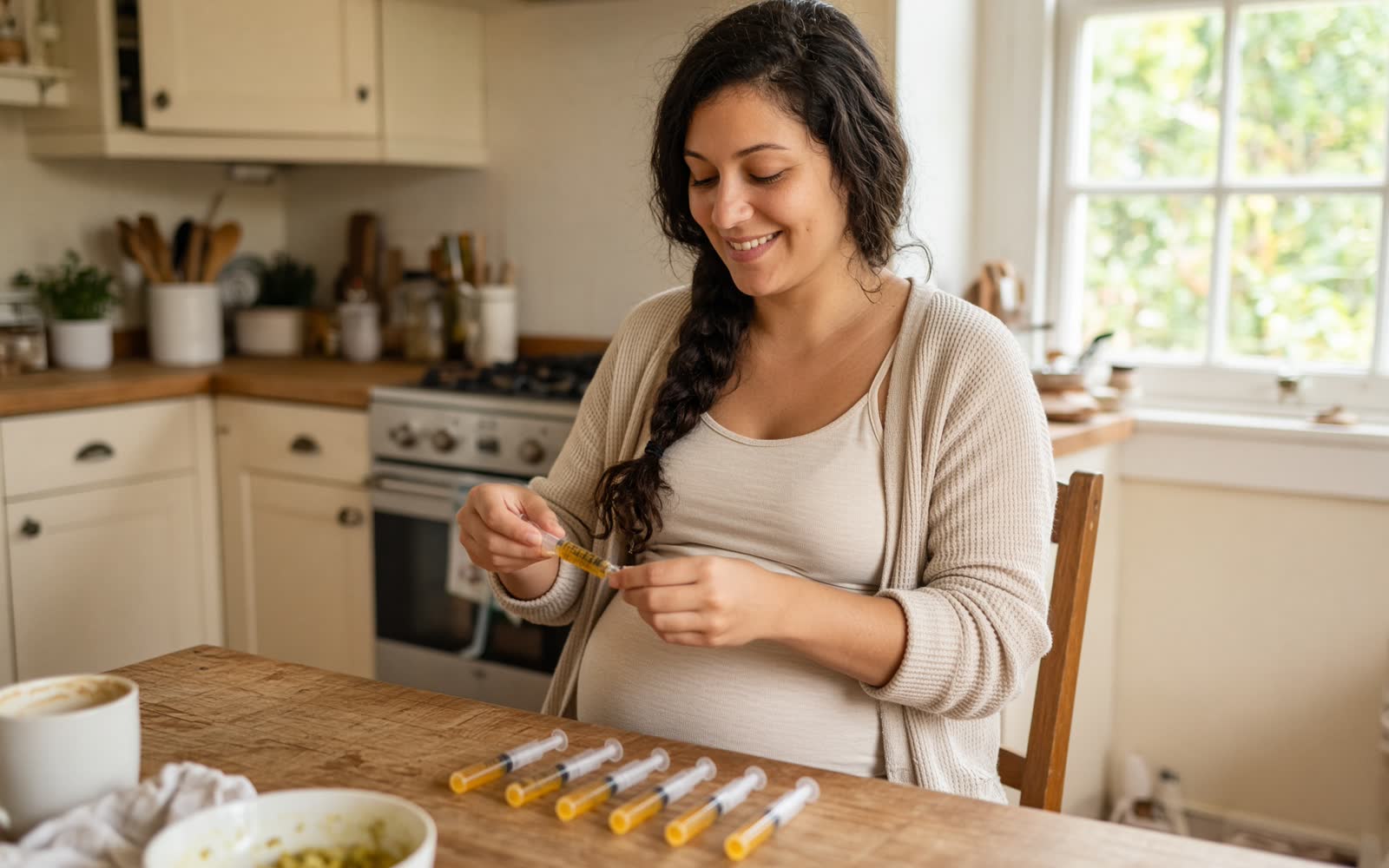
The short answer: legally yes – colostrum is your milk, and the law treats it like the rest of it. Practically, this is the one milk we would usually talk you out of selling. Your newborn has no substitute for it, there is barely any of it, and the eye-watering prices you may have seen belong to a research market that has no public door. If any page on this site ever argues against a sale, let it be this one.
What colostrum is, and why the numbers around it are so odd
Colostrum is the first milk – made in late pregnancy and the first few days after birth, thick and deep yellow, so prized on postnatal wards that midwives call it "liquid gold". It is concentrated in a way mature milk never is: dense with antibodies and protective proteins, produced in amounts that match a brand-new stomach. First feeds are measured in millilitres, not ounces. Over the first days it gives way to transitional and then mature milk, and the window closes.
Everything strange about the colostrum question follows from that arithmetic. It is the most concentrated milk there is, made in the smallest amounts, for the shortest time, for the person who needs it most.
Your baby's claim comes first, and it is the whole batch
Everywhere else on this site, the milk under discussion is a genuine surplus – freezer bags a baby was never going to drink. Colostrum has no surplus by default. The whole of what you make in those first days is roughly one newborn's ration, and the newborn is in the room. If your baby is here and feeding, the colostrum is spoken for, and there is nothing further to weigh.
The one honest exception is small: syringes collected before the birth on a midwife's plan that your baby turned out not to need. Those amounts are tiny, they were collected for a purpose, and the right person to ask about them is the midwife who set the plan – not a marketplace. A freezer full of mature milk can be an opportunity. A drawer of colostrum syringes is a plan that worked out differently, and it deserves a different conversation.
The cow confusion: why the internet thinks this is illegal
Search "is it illegal to sell colostrum" and you land in dairy law. US state dairy codes regulate the sale of "colostrum milk" from cattle – Washington, to take a real example, barred it for human consumption outright until a 2000 bill created a route for processed bovine colostrum as a supplement. Rules like these read alarmingly in a search result and have nothing to do with you. They are about herds.
Human colostrum is human milk in the eyes of food law: legal to sell in the UK and the US, with the same duty for regular UK sellers to register as a home food business, and the same expectation that it is handled and described honestly. There is no special colostrum offence. What you found was a rule about cows.
Who actually buys colostrum – three lanes, honestly
The supplement aisle is not buying yours. The colostrum in wellness powders and capsules – a booming trade at the moment – is bovine, collected from dairy cows and processed at industrial scale. A buyer who wants "colostrum" for a smoothie is looking for a cow product with a label on it, and nothing a mother can pump will meet that order.
The research market is real, and mostly closed. Laboratory suppliers list single-donor human colostrum for research use at prices that stop you mid-scroll – one US supplier lists a single millilitre at $215. But those catalogues do not publish how they source it, there is no counter where a mother hands over syringes, and the paid programmes that do take individual donors – at about a dollar an ounce, roughly $3.40 per 100 ml – buy mature milk, not colostrum. The gap between those two numbers is the true shape of this market: the price is real, and the route to it, for one mother with a few syringes, mostly is not. Writing to a supplier costs nothing; expect a no.
Peer buyers exist, but barely. Demand on the family side is for feeding babies, and the rare buyer genuinely seeking early milk is usually an adoptive or surrogacy family with a newborn – tiny volumes, syringes, dated, and shipped frozen with the same care as any other milk. Adults asking for colostrum for themselves are usually reaching for the supplement trend by other means: we make no health claims for adult use of any human milk, colostrum included, and a seller's audience setting applies here as everywhere.
Expressing before birth – read this even if you skip the rest
Antenatal colostrum harvesting is a real, NHS-taught practice: hand-expressing only – no pump before birth – from about 36 to 37 weeks, taught by your midwife, and useful where a plan for the first feeds helps. It is also specifically not advised in some pregnancies, which is exactly why it is midwife-led from the first conversation.
We bring it up to close a door plainly. Harvesting is a plan for your baby's first days. It is not a production method, and this page must not give a pregnant reader ideas in that direction: collected colostrum belongs with the plan it was collected for, and whether to harvest at all is a question for your midwife appointment, not for a marketplace.
 Hand expressing and antenatal colostrum harvesting
Tap to play – nothing loads from YouTube until you do
Common questions
Can you sell colostrum?
Legally yes – it is your milk, and food law treats it the same way. Practically the volumes are tiny, your newborn's claim is absolute, and the famous prices sit in a research market with no public door. This is the one milk we would usually talk you out of selling.
Is it illegal to sell colostrum?
The "illegal" results are dairy law about cows. Human colostrum follows human-milk law: legal in the UK and US, with regular UK sellers registering as a home food business like any other milk seller.
How much is human colostrum worth?
Research suppliers list it at around $215 per millilitre – a laboratory catalogue price nobody pays a mother at her kitchen table. Paid programmes taking individual donors buy mature milk at about a dollar an ounce, and peer sales of early milk, where they happen, price like ordinary milk.
Can I express colostrum before my baby is born to sell it?
No. Antenatal harvesting is a midwife-led plan for your own baby, taught from about 36 weeks and not advised at all in some pregnancies. Collected colostrum belongs with the plan it was collected for.
Isn't colostrum a superfood for adults?
The supplement version is cow colostrum. For adult use of human milk we make no health claims, and nothing on this site is medical advice – we checked the adult claims one by one and published what we found.
Sources
- East Cheshire NHS Trust – hand expression and antenatal colostrum harvesting – the 36–37 week window, hand-only rule and midwife-led safety checks
- NHS Greater Glasgow and Clyde – antenatal colostrum harvesting guideline
- Washington State SHB 2628 bill report – the dairy-law "colostrum milk" rules that dominate search results
- Lee Biosolutions – single-donor human colostrum listing – the research catalogue price quoted above
- Prolacta Bioscience – donor programme and Ni-Q – donor compensation – the paid programmes, which buy mature milk