Guides › For adoptive and surrogacy families
Buying breast milk for an adopted or surrogate baby
Your baby is coming, or already here, and you would like to feed them human milk. It is a completely ordinary thing to want, quite a lot of families do it, and almost nobody has written down how. Here is how, including the parts about money that everyone leaves out.

Yes, you can buy milk for your baby, and families like yours are the biggest group of buyers there is. Ask a milk bank first, though a healthy full-term baby usually will not qualify. After that it is informal donation or buying from sellers, and it will most likely take more than one seller. Budget around 25–30 oz a day, 750–900 ml, at $1.50–$4.50 an ounce and you will not be shocked by the arithmetic.
Ask a milk bank first, and expect a kind no
Every page here says milk banks come first, so let's be straight about what that means for you specifically. Banks exist chiefly for premature and medically fragile babies in neonatal care, and there is never quite enough. A healthy full-term baby, however they arrived in your family, usually will not qualify.
Ask anyway. Your midwife, health visitor or paediatrician will know what your local bank does, some banks release milk more widely when supply allows, and if your baby was early or has been unwell the answer may change entirely. A no costs you a phone call. A yes gets you screened, pasteurised milk with a clinician alongside it, which is the best version of this there is.
If the answer is no, you have not been turned away from something you should have had. You have simply joined the large, unremarkable group of families who source milk another way.
How much a baby drinks, and what that costs
For planning purposes: an exclusively milk-fed baby averages about 25 ounces a day – about 750 ml – between one month and six, with a typical range of 19 to 30 ounces, 560 to 900 ml, spread across the day and night. Budget at the top of that range and the arithmetic will not surprise you. Newborns take less per feed and feed more often; older babies drink more per sitting and then start on solids and taper.
We give you that number so you can do the sums, not as a feeding instruction. What your baby actually needs is a question for your paediatrician or a lactation consultant, and if you would like one to talk to, the helplines and organisations are listed here – all of them free, all of them used to questions from adoptive and surrogacy parents.
The arithmetic, then. At $1.50–$4.50 an ounce (£1.20–£3.50 per fl oz), a full day of bought milk is a meaningful sum and a full month is a serious one. Most families do not buy every ounce, which is what the rest of this page is about. Two things reduce the bill honestly:
- Buy bigger, less often. Frozen postage costs the same whether the box holds 50 oz or 200 – a litre and a half, or six. Larger orders spread the insulated box, the gel packs and the next-day service across more milk.
- Buy local where you can. Collection removes the shipping cost completely, and it is the easiest way for milk to stay properly frozen.
What moves a seller's price – freshness, screening, track record – is set out in what breast milk is worth. It is written for sellers, and it is just as useful read from your side.
Why it usually takes more than one seller
A seller's surplus is what is left after her own baby has fed. It is real and it can be substantial, but it is a by-product of another family's life, and that life keeps moving: she weans, she goes back to work, her own baby has a growth spurt and the surplus evaporates for a fortnight.
So plan for two or three sellers rather than one, and start looking for the next one before you need her. Families who do this well treat it like any small supply chain: a couple of regulars, a big freezer, a rolling stock of a few weeks, and dates on everything so the oldest gets used first. If your freezer is now the most important appliance you own, the storage clocks are here.
And say out loud to your sellers what you need and for how long. A woman with a full freezer would far rather feed one baby steadily for four months than sell to nine strangers once each. That kind of arrangement is the good version of this, for both of you.
Mixing, topping up, and not feeling bad about it
Almost nobody buys one hundred per cent of what their baby drinks. Families mix bought milk with formula, or use human milk for some feeds and formula for others, or buy heavily in the early months and less later. That is the normal shape of this, and there is no failure anywhere in it. The case for the mixture is genuinely positive – the living components in milk arrive with every ounce, and formula alongside guarantees nothing is missing – and we wrote it down properly here.
Formula is a good, safe, carefully regulated food, and a baby fed on it thrives – what it can and cannot match is set out here. If you find yourself apologising to anyone about the ratio in your fridge, please don't. You are already doing an unusual amount of work to feed your child well.
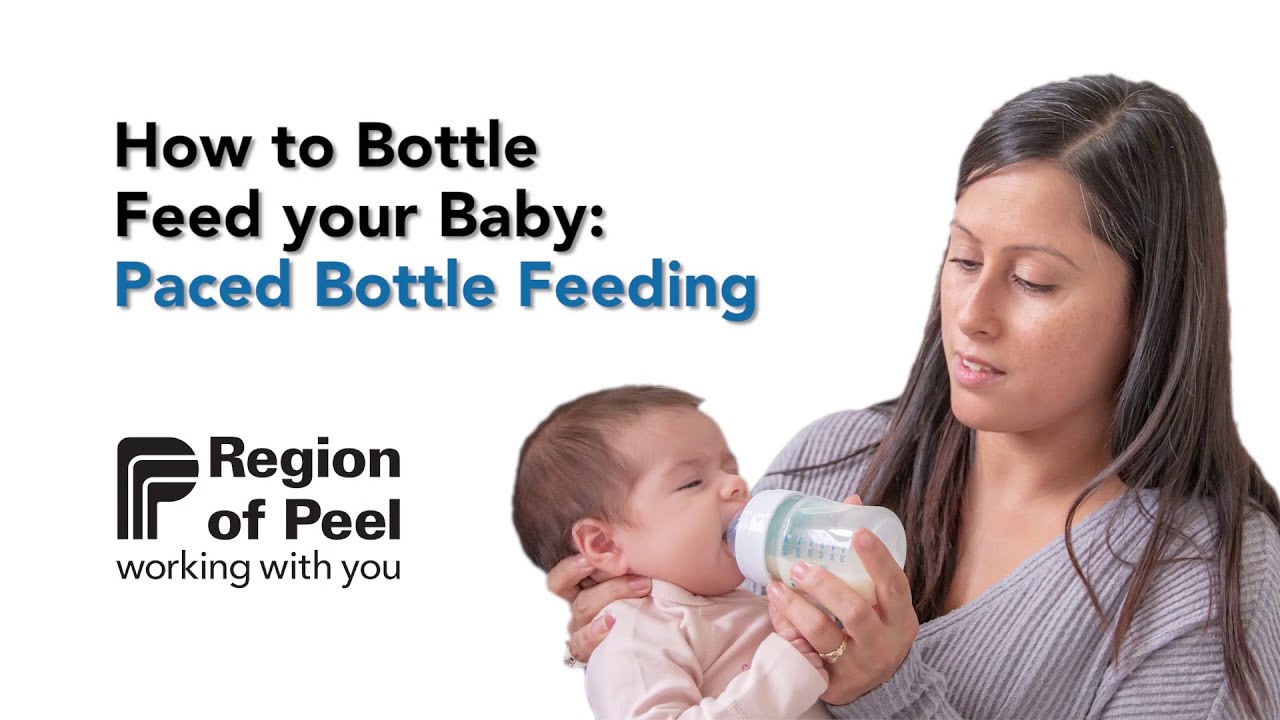 How to Bottle Feed your Baby: Paced Bottle Feeding
Tap to play – nothing loads from YouTube until you do
Could you produce milk yourself?
Possibly, yes. Induced lactation is a real route that adoptive parents, non-gestational mothers in same-sex couples and intended parents through surrogacy do use, sometimes to feed entirely and often to feed partly alongside bought or donated milk.
It also involves hormones, protocols, timing and a pump, which puts it firmly outside what a marketplace should be advising you about. This is the point where we hand you to people who do it properly: the lactation consultants and helplines listed here can talk you through whether it is worth trying and how to start. Ask early if you can – the protocols work better with lead time.
What to ask a seller
You are allowed to ask all of this, and any decent seller will be pleased you did.
- How fast does the milk get cold, and how is it stored? Chest freezer or fridge-top box, ever thawed and refrozen, how old the oldest bag is.
- Is every bag dated? Non-negotiable. Undated milk cannot be rotated and cannot be trusted.
- Will she share a disclosure sheet? Diet, caffeine, alcohol, smoking, medications, pump hygiene. Offered before you ask is the sign you want.
- Has she been screened, and when? No law requires it for private selling, so many good sellers have not. If she has, here are the five tests, and the honest limits of what they prove.
- How will it travel? Agree the packing before the payment. The box recipe is here if you want to know what good looks like.
The wider checklist, scams included, is in buying breast milk safely, and the risk picture without the scaremongering is in is buying breast milk safe?
One last thing, since it may be on your mind
Feeding a baby another woman's milk can feel strange for about a fortnight, and then it stops. It is among the oldest arrangements humans have – babies were fed by other women for most of our history, and every neonatal unit in the country runs a formal version of it today. If the strangeness is nagging at you, we wrote about exactly that in why buying breast milk feels weird, and about the long history of it in the return of the wet nurse.
MilkMom is being built to make this part easier: listed prices, sellers with names and ratings, a disclosure sheet you can read before committing, and your payment held until the milk arrives as described. We are not open yet. When we are, the buyer's side of the interest form is where to hear about it first, and nobody will ever ask you to explain why you need milk.
Common questions
Can I buy breast milk for an adopted baby?
Yes. It is legal in the UK and the US, and adoptive and surrogacy families are among the most common buyers there are.
Will a milk bank give us milk?
Usually not for a healthy full-term baby, since banks prioritise premature and ill babies and supply is tight. Ask anyway – some banks release milk more widely when they can, and it costs you a phone call.
How much will it cost?
Budget around 25–30 oz a day, 750–900 ml, at $1.50–$4.50 an ounce, plus frozen postage unless you collect. Most families combine bought milk with formula, so the real bill is usually well under the theoretical one.
Can one seller supply my baby?
Rarely. A surplus is what is left after her own baby feeds, and it changes as her life changes. Two or three sellers is the sensible plan.
Could I produce milk myself?
Sometimes, through induced lactation, and adoptive and non-gestational parents do it. It needs proper support – start with a lactation consultant or a helpline, and ask early, because lead time helps.
Is it strange to use another woman's milk?
It is one of the oldest arrangements there is, and milk banks do a formal version of it every day. The strangeness is a recent feeling, and it was taught to us by seedy venues – never by the milk. We wrote a whole piece on it.