Guides › Safety
Is buying breast milk safe? Let's talk about the bacteria study everyone quotes.
If you've read one scary headline about shared milk, it traces to a handful of studies. They deserve to be read properly – because what they actually measured is the strongest argument for doing this well.
The short answer: the risk in buying breast milk sits almost entirely in the handling, and handling is fixable. The studies behind the frightening headlines bought milk from anonymous classifieds and had it posted to a PO box with little or no coolant. What they measured was the venue, not the milk.
Human milk is a raw food from one human body. Standards reduce that risk; they do not remove it. For a premature or medically fragile baby, an accredited milk bank with pasteurised, batch-tested milk comes first, always.
What the famous study found
In 2013, researchers bought about a hundred samples of breast milk from anonymous classifieds sites and had them shipped to a post-office box. Most arrived with high bacterial counts; a follow-up found around one sample in ten had cow's milk mixed in. Those results are real, and we're not going to pretend otherwise – you'll notice we just told you about them ourselves.
What it actually measured
Look at the conditions. The sellers were anonymous, with no reputation to protect and no relationship to the buyer. Nobody asked about hygiene, because nobody could. The milk travelled for days, often with little or no coolant, to a PO box where nobody checked whether it arrived frozen. And the adulterated samples came from sellers who knew they would never be identified.
Every one of those conditions is a property of the venue, and none of them is a property of the milk. The study is a portrait of what anonymous, standards-free classifieds produce – which is the market as it has existed for twenty years, and the reason MilkMom exists.
Where bacteria actually come from
Expressed milk normally carries some skin flora; that's true of every bottle ever pumped, including the ones babies drink at home every day. Counts become a problem through growth, and growth needs two things: time and warmth. Milk that goes from a clean pump into a fridge within the hour, then into a deep freeze, holds its counts flat for months. The risk lives in unwashed pump parts, counters, and warm transit hours – handling, start to finish.
Handling is fixable. That's the whole point – and the fix reaches all the way into your own kitchen, where ten minutes and a pan of water will pasteurise bought milk outright.
What controls the risk
- A seller with a name and a track record. Reputation changes behaviour – the difference between the study's sellers and a mom with sixty rated sales is the difference between an anonymous stranger and a small business owner.
- The disclosure sheet, covering pump hygiene, storage and freezer dates, locked to the listing.
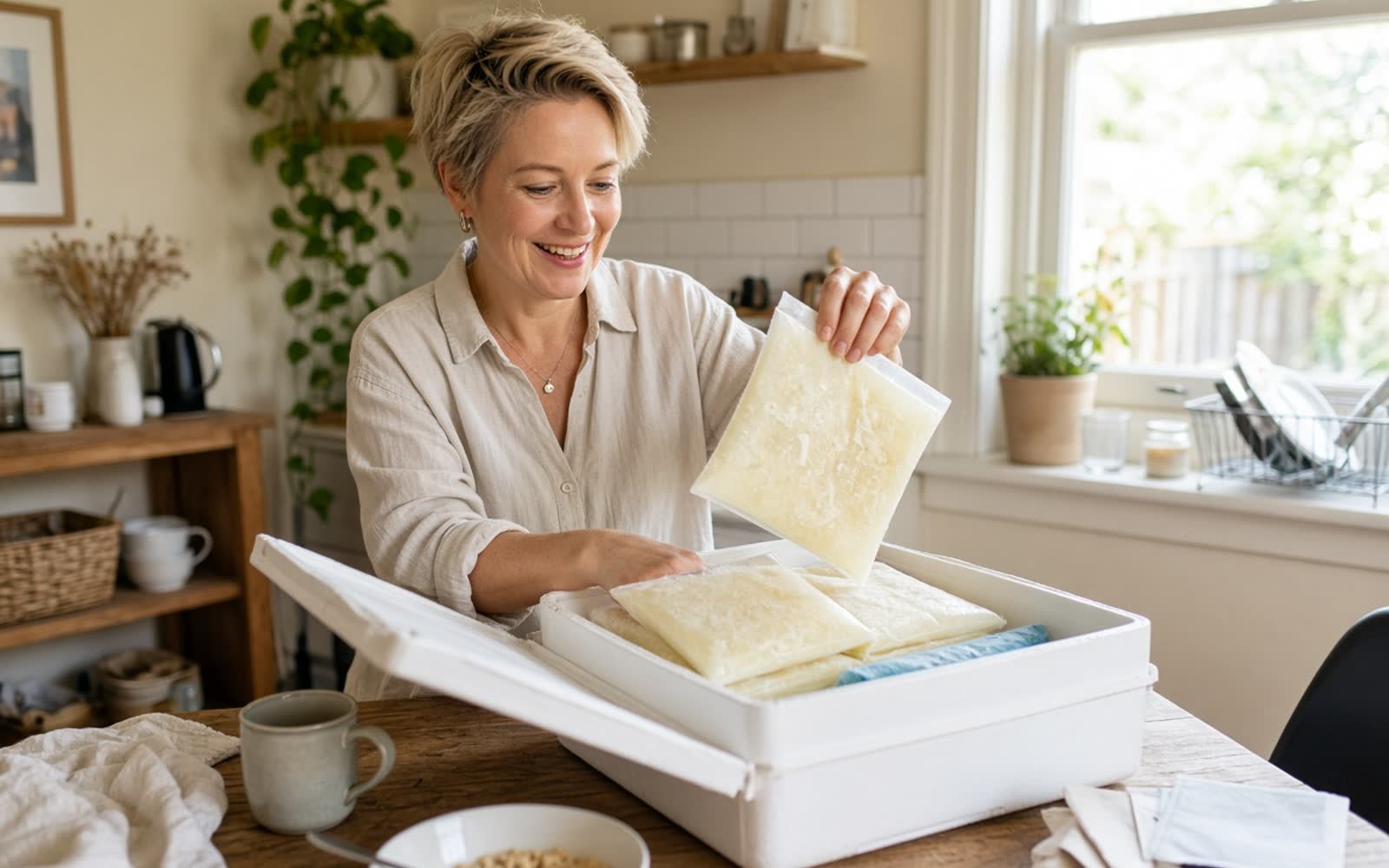
- An unbroken cold chain – the packing standard exists precisely because transit warmth is where the study's samples went wrong. Frozen solid on arrival, or it doesn't get fed to anyone and the payment comes back.
- Home pasteurization for infant feeding – the Holder method (62.5°C for 30 minutes in a water bath) is what milk banks do at scale, and it's available to any kitchen with a thermometer. It closes the gap that disclosure can't reach.
 Safe & Simple: How to Pasteurize Breast Milk at Home
Tap to play – nothing loads from YouTube until you do
Honest context, both directions
Worth knowing as you weigh it: powdered infant formula is not sterile either – it carries its own pathogen risks, which is why preparation guidelines exist and why formula tins tell you to use boiled water. Careful handling is the price of feeding a baby anything at all. Human milk is a raw food from one human body, and that line stays on every page we publish: the risk is reduced by standards, never removed by them. For a premature or medically fragile baby, an accredited milk bank with pasteurized, batch-tested milk comes first, always.
Common questions
Is it safe to buy breast milk online?
It depends almost entirely on the venue and the handling. Milk from a named seller with a track record, an honest disclosure sheet and an unbroken cold chain is a different proposition from milk bought anonymously and shipped warm. The milk did not change; everything around it did.
What did the breast milk bacteria study actually find?
In 2013 researchers bought about a hundred samples from anonymous classifieds and had them shipped to a post-office box. Most arrived with high bacterial counts, and a follow-up found around one sample in ten had cow's milk mixed in. Those results are real. The conditions that produced them, anonymity and days of warm transit, are properties of that venue.
Where do the bacteria come from?
Expressed milk normally carries some skin flora, which is true of every bottle ever pumped. Counts become a problem through growth, and growth needs time and warmth. Milk that goes from a clean pump into a fridge within the hour and then into a deep freeze holds its counts flat for months.
Can I pasteurise breast milk at home?
Yes. The Holder method, 62.5°C for 30 minutes in a water bath, is what milk banks do at scale and it is available to any kitchen with a thermometer. If you are feeding a baby, it closes the gap that disclosure cannot reach.
Is formula safer?
Powdered infant formula is not sterile either, and carries its own pathogen risks, which is why preparation guidelines exist and why tins tell you to use boiled water. Careful handling is the price of feeding a baby anything at all.
Should I buy peer milk for a premature baby?
No. For a premature or medically fragile baby, talk to your care team about an accredited milk bank first: pasteurised, batch-tested and clinically overseen. Peer milk is for healthy babies and for adults making their own choices.