Guides › Where to sell
Where to sell breast milk
The buying side of this question gets all the coverage, so this is the seller's map: four places your milk can go, what each one pays, what each one asks of you – and the option nobody mentions, which is that your freezer gives you months to choose well.

The short answer: four doors, and they pay very differently. A milk bank, which pays nothing and comes first if you want your surplus reaching the babies who need it most. A sharing network, where milk is a gift and money never enters the room. Selling it yourself, which today happens on classifieds-style sites and in parenting groups at $1.50–$4.50 an ounce (£1.20–£3.50 per fl oz) – what that is for your stash – with everything that venue asks you to carry alone. Or a commercial buyer, paying little on its own terms. There is also a fifth door that costs nothing to hold open: waiting well.
Milk banks: nothing paid, and the strongest reason to give anyway
Every route on this page starts here, because the babies at the top of a milk bank's list are premature or unwell, and screened, pasteurised, batch-tested milk is what those babies should have. A bank will not pay you – the screening, pasteurising and testing are where the money goes – but if what your surplus is really for is meaning rather than income, this door delivers more of it per ounce than any other on this page.
Donating and selling also mix better than people assume: plenty of sellers give their first hundred ounces, three litres, to a bank and sell what comes after. Banks, sharing and selling, compared properly lays the three side by side.
Sharing networks: a gift culture, so don't sell in one
Milk-sharing communities match mothers with spare milk to families who need it, locally and for free, and they have run on goodwill for over a decade. Offering milk for money there breaks their rules and reads badly to the people in the room – it is a gift economy, and it works precisely because it is one. If donating locally appeals more than a bank's paperwork, this is that door. Keep selling out of it.
Selling it yourself, today
Private selling exists right now, and it would be silly of us to pretend otherwise: classifieds-style milk sites and local parenting groups carry listings every day, and real buyers answer them. Listing is typically free, prices sit in the standard $1.50–$4.50 range, and for twenty years this is where the whole market has lived.
What those venues never spell out is how much of the job lands on you. There is no listed price, so every sale is negotiated one message at a time. There is no enforced audience, so your "families only" preference is a request, not a rule – you meet whoever writes to you, and you do your own vetting from a text thread. And there is no payment protection built in: nobody holds the money, nobody verifies the buyer, and a dispute is between you, a stranger and whichever payment app you both picked. The venue the alarming studies actually measured is this one.
None of that makes selling today a mistake – it makes discipline the price of entry. If you go this route, go armed: payment secured before anything ships (goods-and-services, never friends-and-family, whatever fee it saves), tracked postage to the address on the payment record, every bag dated, and records from sale one. The full drill is in how to sell, start to finish and the shipping guide. UK sellers: council registration applies wherever the selling happens – a group chat counts the same as a website.

Commercial buyers: volume, screening, and very little money
Processors and for-profit programmes buy milk to pasteurise, test and resell, mostly to hospitals. The few that pay sellers sit at the bottom of the peer range and set their own screening, shipping and volume terms. For a mother with an ordinary surplus, the arithmetic rarely works – it is a supply contract, scaled for freezers much emptier than yours by the time they finish with the paperwork.
Waiting well: the door your freezer holds open
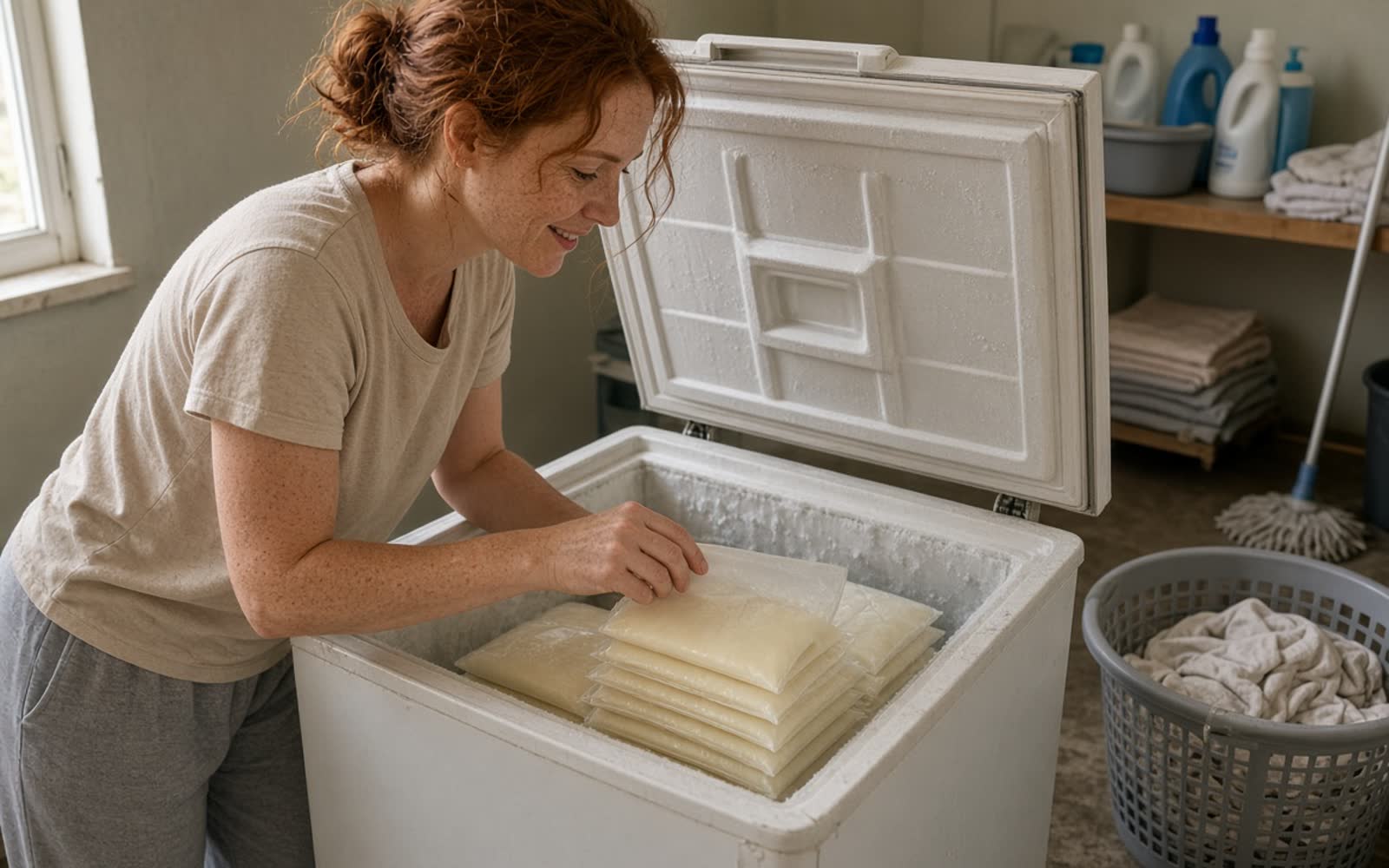
A thing the venue listings never tell you: this decision has a shelf life measured in seasons. Deep-frozen milk holds best quality for about six months, and US guidance accepts a year at −18°C in a chest freezer – the clocks, properly. A stash built this month, frozen flat and dated, is still at its best long after you have taken your time choosing where it goes.
We are not neutral about what that time is for, and you can see why – so here are the plain facts instead of a pitch. MilkMom opens soon, with the things today's venues make you carry yourself built into the floor: a listed price instead of a negotiation, an audience setting the platform enforces, a disclosure sheet buyers read before they commit, and payment held until the milk arrives as described. The first sellers get a year without platform fees and a say in the rules before they set. Registering interest costs nothing, commits you to nothing, and keeps your stash growing toward a better market than the one that exists today.
Common questions
Where can I sell my breast milk?
Today: classifieds-style milk sites and local parenting groups, at $1.50 to $4.50 an ounce (£1.20 to £3.50 per fl oz). Milk banks take donations rather than buying, sharing networks are gift-only, and MilkMom opens soon with listed prices and payment held until delivery.
How much can I get for it?
$1.50 to $4.50 an ounce, about £1.20 to £3.50 per fl oz, wherever you sell it. Freshness, screening, consistency and track record decide where in the range you land – the full pricing logic is here, and it matters more than the venue does.
Will a milk bank pay me?
Non-profit banks don't pay – the screening, pasteurising and testing are the expensive part, and their milk goes first to premature babies. A few commercial programmes pay by the ounce at the bottom of the range, on their own terms. If meaning matters more than money, the bank is the best door there is.
Is it legal to sell my milk?
Yes, in the UK and the US – the two-minute version. UK sellers who sell regularly register with the council as a home food business: free, twenty minutes, and it applies whether you sell on a website or at the school gates.
Do I have to sell to strangers online?
On today's venues, mostly yes – you vet buyers yourself, negotiate in messages and carry the payment risk. That is the venue problem in one sentence, and removing it is the reason MilkMom exists.
How long does my stash stay sellable while I decide?
About six months at best quality deep-frozen, and US guidance accepts up to twelve at −18°C. Date every bag, keep them in the body of the freezer, and the decision keeps for as long as the milk does.