Guides › Selling
Selling your milk when there's no baby at home
Most of this site talks to a mother with a baby in the house and more milk than he drinks. Plenty of women who are lactating are not in that position at all, and almost nobody writes for them. This page does.
Can you sell your milk if no baby is drinking it? Yes. Nothing in US or UK law ties selling your own milk to having an infant at home. The legality is the same, the UK council registration is the same, and the handling standards are the same.
The objection people raise about selling milk almost always runs through one worry: that a baby in the house might get less. Where there is no baby in the house, that worry has nothing to stand on.
Weaned, and still making milk
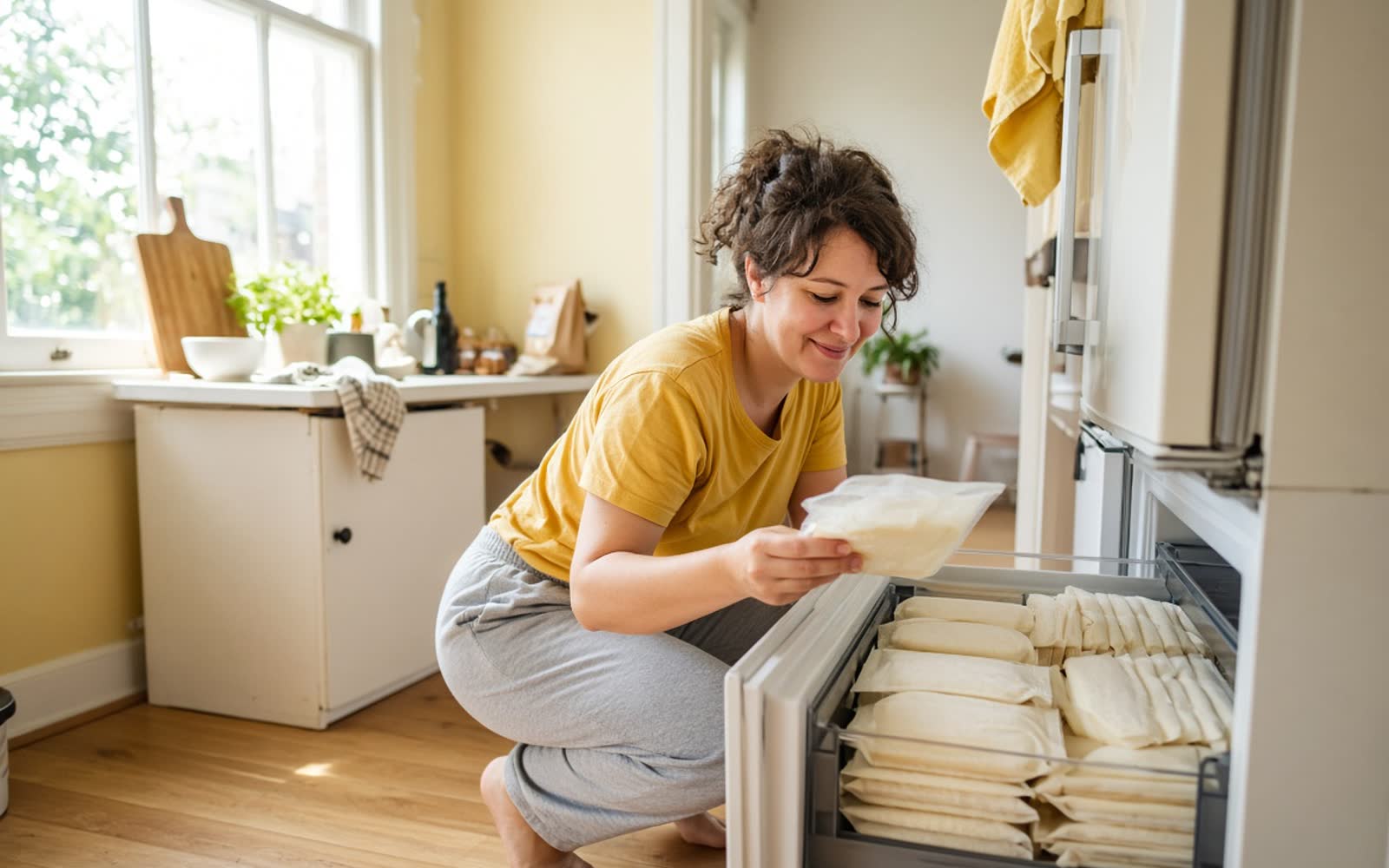
Feeding ends and the freezer does not empty itself. A stash built over a year of pumping outlives the baby's interest in it by months, and a good number of women arrive at the question of selling for exactly this reason: the milk is there, it cost something to make, and pouring it away feels wrong.
The stash is yours to decide about. The one thing working against you is the clock, since milk holds best quality about six months deep-frozen and up to twelve in a proper chest freezer – the storage guide has the numbers and how to tell tired milk from spoiled milk. A stash that has been sitting for a year is worth deciding about this month.
Relactation, where supply is rebuilt after it has wound down, sits in the same place. It is a real thing that mothers do, usually to feed a baby, and how to go about it belongs with an IBCLC, never with us.
Exclusively pumping
If you pump and bottle-feed instead of feeding at the breast, you already know the vocabulary the rest of the internet skips. You are also, statistically, the most likely person on this site to be holding several hundred ounces, because a pump does not read a baby's appetite and match it. Supply set by a schedule tends to run ahead of what one child drinks.
Nothing about the seller side changes for you. Dated bags, cold within the hour, frozen flat, an honest disclosure sheet covering diet, medication and pump hygiene. Pumping for a surplus covers the routine, and the full seller road covers the rest of it.
Lactating by choice, with nobody to feed
Some women lactate without a baby in the picture at all. Adoptive and intended parents have induced lactation for years in order to feed a child arriving another way. Others induce or keep going for reasons of their own, including selling the milk.
Our position is straightforward: we do not treat that as a problem. Nobody is displaced, the milk goes to someone who wants it, and the arrangement is voluntary at both ends. That is the same test we apply to every other seller here, and it is the reason we do not screen buyers by what they want the milk for.
One practical note, since it comes up. Milk produced this way is judged by buyers on the same terms as any other: dates, disclosure, handling, and a track record. Where it came from is a question about you, and what a buyer is paying for is how it was looked after.
 Thinking About Inducing Lactation? Start Here
Tap to play – nothing loads from YouTube until you do
After a loss
Some women are lactating because their baby died. If that is you, we are sorry, and this page will not try to sell you anything.
Your options are all open, including doing nothing for now. Many milk banks run bereaved donor pathways and handle the arrangements gently; if your milk can feed a fragile baby in a neonatal unit, that is the highest use it will ever have, and we would rather point you there than anywhere else. Some mothers pump for a while and find it helps. Some stop. Both are ordinary, and the helplines can talk through winding down without pain. Nothing here needs deciding today.
What doesn't change
- The law. Selling your own milk is legal in the US and the UK regardless of who is or isn't feeding at home – the two-minute version.
- The UK paperwork. Sell regularly and you register as a home food business with your council: free, twenty minutes, and walked through here. The duty follows the activity, and the activity is selling food.
- The handling. Cold within the hour, frozen flat, dated, an unbroken cold chain to the buyer. Milk is a raw food whoever made it and whyever they made it.
- Milk banks first for fragile babies. A premature or medically fragile baby should have screened, pasteurised bank milk. That line holds on every page of this site.
- Your audience is yours. Every listing carries a seller-set audience, and you decide who may buy from you without owing anyone an explanation.
- The venues. Milk banks, sharing networks, today's selling sites and the case for patience – where to sell, compared honestly.
Common questions
Can I sell breast milk if I don't have a baby?
Yes. Nothing in US or UK law ties selling your own milk to having an infant at home, the UK registration is identical, and so are the handling standards. The worry people usually voice about sold milk is that a baby at home might get less, and where there is no baby at home it has nothing to stand on.
Can I sell my milk after my baby has weaned?
Yes, and a stash left over from a finished feeding journey is one of the commonest reasons mothers look at a marketplace at all. The milk is yours. Age is the thing to watch: best quality runs about six months deep-frozen and up to twelve, so check the dates before you promise a batch to anyone.
I'm exclusively pumping. Can I sell the extra?
Yes, and you are likely to have more of it than most. A pump works to a schedule rather than to an appetite, so exclusively pumping mothers hold the biggest stashes on average. The seller requirements are unchanged, and the five doors for excess milk lays out the alternatives to selling too.
Can you induce lactation without being pregnant?
It is possible, and adoptive and intended parents have been doing it for a long time. How is a medical question, and no business of a milk site: the usual routes involve prescription medication and a heavy pumping schedule, so we publish no protocol and no dosing. A doctor or an IBCLC is the right first conversation, and the Drugs in Breastmilk service takes medication questions.
Is it wrong to sell milk that no baby is drinking?
We do not think so. The harms people worry about with sold milk run through one door: a baby in the house getting less, or milk stretched to make it go further for money. Where nobody is displaced, the milk reaches someone who wants it and both sides chose to be there. If the question behind the question is why any of this feels odd, we wrote a whole piece about that.
I'm still lactating after losing my baby. What are my options?
All of them, including doing nothing for the moment. Milk banks often run bereaved donor pathways and will handle it kindly, and a fragile baby in a neonatal unit is the highest use your milk can have. Pumping on for a while and stopping now are both ordinary choices. The free helplines can talk you through winding down comfortably.